Why Musclebuilders Should Stretch

Why Musclebuilders Should Stretch

From the Brickyard | Subject: Don’t just build muscle—unleash it.

——

You Build the Muscle. Stretching Lets It Roam Free.

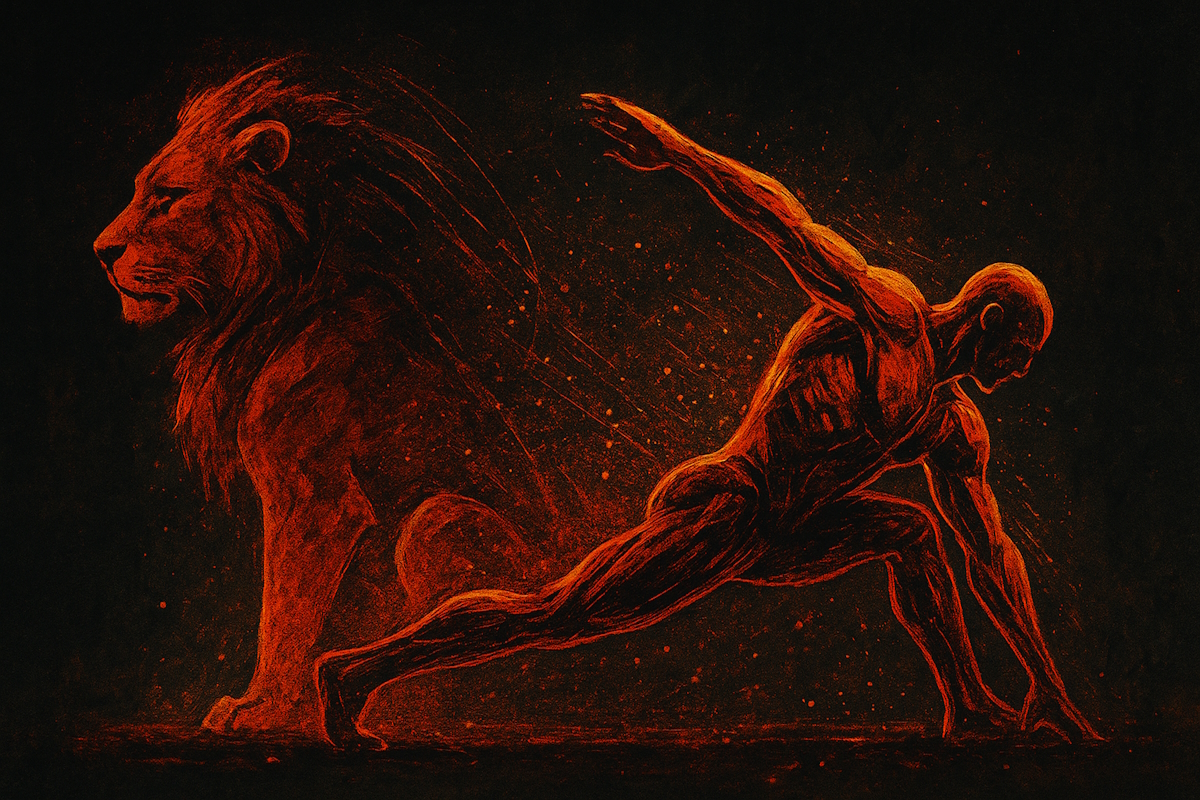
Muscle without mobility is like a lion in a cage.

You can stack plates and grind reps. But if your body moves like a rusted-out crowbar?

You’re leaving power, performance, and longevity on the table.

Let’s be real: Most lifters stretch like they floss—rarely, poorly, or not at all.

But the Musclebuilder isn’t most lifters.

You’re building strength for life. For fatherhood. For the fight. And that means training for function, not just flex.

That means you stretch.

The Ugly Truth: Most Guys Are Stiff and Tight

We sit too much. We hunch too much. We train hard and recover soft.

Result? Tight hip flexors, locked-up hamstrings, stiff backs, and shoulder joints that feel like they’re 60 when you’re 35.

Tight muscles don’t just feel bad—they perform bad.

  • Range of motion tanks
  • Power output drops
  • Injury risk spikes
  • Recovery slows
  • Posture crumbles

Flexibility work has been shown to improve joint range of motion and may help reduce muscle-strain injuries when consistently practiced. Chronic stretching programs can complement strength training by improving mobility and movement efficiency (Behm et al., 2016; McHugh & Cosgrave, 2010).

You built that muscle. Now let it move.

Muscle Without Mobility is a Liability

You ever see a jacked dude who can’t scratch his back or touch his toes?

Looks impressive…until he tries to tie his shoes and pulls a hammy.

The Musclebuilder doesn’t just want to look powerful—he wants to be powerful.

Flexibility and mobility are the keys to a usable body. That means:

  • Deeper, stronger, and safer lifts
  • Better posture
  • Smoother recovery
  • Fewer tweaks, strains, and setbacks

Look like a statue. Move like an athlete.

Stretching: The Recovery Weapon Nobody Talks About

You know what stretching also does? It helps you recover like a machine.

Right after training, your body’s on high alert—sympathetic nervous system cranked, heart rate up, cortisol flying.

Pairing easy static stretching with slow, diaphragmatic breathing helps shift the body into parasympathetic recovery (higher HRV) and can improve cortisol regulation over time (Zaccaro et al., 2018; Laborde et al., 2022; Corey et al., 2014).

Stretching post-workout isn’t fluff—it’s next-level recovery tech.

How to Stretch Like a Musclebuilder

You don’t need to go full yoga monk. But you do need a routine.

Here’s how to keep it primal and powerful:

Daily Mobility Warm-Up (5–10 minutes)

Start every session with dynamic moves:

  • Hip circles
  • Arm swings
  • Leg swings
  • World’s Greatest Stretch
  • Cat/Cow + T-Spine Rotations

Dynamic stretching before lifting has been shown to improve strength and power performance in strength-trained athletes.

Research comparing dynamic and static warm-ups found that dynamic stretching enhances performance and doesn’t blunt strength output—while static stretching before heavy lifting can temporarily reduce force and power (Samson et al., 2013; BMC Sports Science, Medicine & Rehabilitation, 2023).

In short: fire up the muscle, don’t put it to sleep. Hit your dynamic warm-up first—save the long static holds for the cooldown.

Post-Workout Static Stretching (5–10 minutes)

  • Hold each stretch 30–60 seconds
  • Breathe deeply through the nose
  • Focus on muscles worked that day

Bonus points for foam rolling, band flossing, or lacrosse ball work—especially if you’re feeling like a busted-up action figure.

Build. Stretch. Dominate.

Stretching doesn’t make you soft—it makes you durable.

It keeps your muscle usable. Your joints pain-free. Your performance primed. Your mission on track.

The guy who trains hard but skips mobility? He breaks down.

The Musclebuilder? He stays in the game.

Stretching isn’t separate from your training—it’s the final rep.

The closing ritual. The muscle maintenance. The long game.

Bottom Line: Stretch Like a Warrior, Not a Weekend Warrior

Muscle is only as good as the movement it allows.

Stretch daily. Move better. Recover faster. Train longer.

It’s not just about being strong—it’s about being ready.

Brick by brick.

-Brickwall

Sources

Behm, David G., Anthony J. Blazevich, Anthony D. Kay, and Michael McHugh. “Acute Effects of Static Stretching on Strength and Power Performance.” Journal of Strength and Conditioning Research, vol. 30, no. 2, 2016, pp. 534–540. https://pubmed.ncbi.nlm.nih.gov/26642915/

McHugh, Malachy P., and Caroline H. Cosgrave. “To Stretch or Not to Stretch: The Role of Stretching in Injury Prevention and Performance.” Sports Medicine, vol. 40, no. 9, 2010, pp. 747–762. https://pubmed.ncbi.nlm.nih.gov/20030776/

Samson, Michael, Duane C. Button, Anis Chaouachi, and David G. Behm. “Effects of Dynamic and Static Stretching within General and Activity-Specific Warm-Up Protocols.” Journal of Strength and Conditioning Research, vol. 27, no. 4, 2013, pp. 1139–1151. https://pubmed.ncbi.nlm.nih.gov/24149201/

A Systematic Review and Network Meta-Analysis of the Effects of Different Warm-Up Methods on Explosive Lower Limb Strength.BMC Sports Science, Medicine & Rehabilitation, vol. 15, 2023, Article 111. https://pubmed.ncbi.nlm.nih.gov/37644585/

Zaccaro, Andrea, et al. “How Breath-Control Can Change Your Life: A Systematic Review on Psycho-Physiological Correlates of Slow Breathing.” Frontiers in Human Neuroscience, vol. 12, 2018, Article 353. https://www.frontiersin.org/journals/human-neuroscience/articles/10.3389/fnhum.2018.00353/full

Laborde, Sarah, et al. “Effects of Voluntary Slow Breathing on Heart Rate and Heart Rate Variability: A Systematic Review and a Meta-Analysis.” Neuroscience & Biobehavioral Reviews, vol. 132, 2022, pp. 470–486. https://pubmed.ncbi.nlm.nih.gov/35623448/

Corey, Susan M., et al. “Effect of Restorative Yoga vs. Stretching on Diurnal Cortisol Regulation among Women with Metabolic Syndrome.” Journal of Alternative and Complementary Medicine, vol. 20, no. 12, 2014, pp. 971–979. https://pubmed.ncbi.nlm.nih.gov/25127084/

Simic, L., N. Sarabon, and G. Markovic. “Does Pre-Exercise Static Stretching Inhibit Maximal Muscular Performance?” Scandinavian Journal of Medicine & Science in Sports, vol. 23, no. 2, 2013, pp. 141–148. https://pubmed.ncbi.nlm.nih.gov/22316148/

Martarelli, Debora, Maria Cocchioni, Silvia Scuri, and Pierluigi Pompei. “Diaphragmatic Breathing Reduces Exercise-Induced Oxidative Stress.” Journal of Sports Medicine and Physical Fitness, vol. 51, no. 1, 2011, pp. 136–139. https://pubmed.ncbi.nlm.nih.gov/19875429/
Milk: Friend or Foe for the Bodybuilder?

Milk: Friend or Foe for the Musclebuilder?

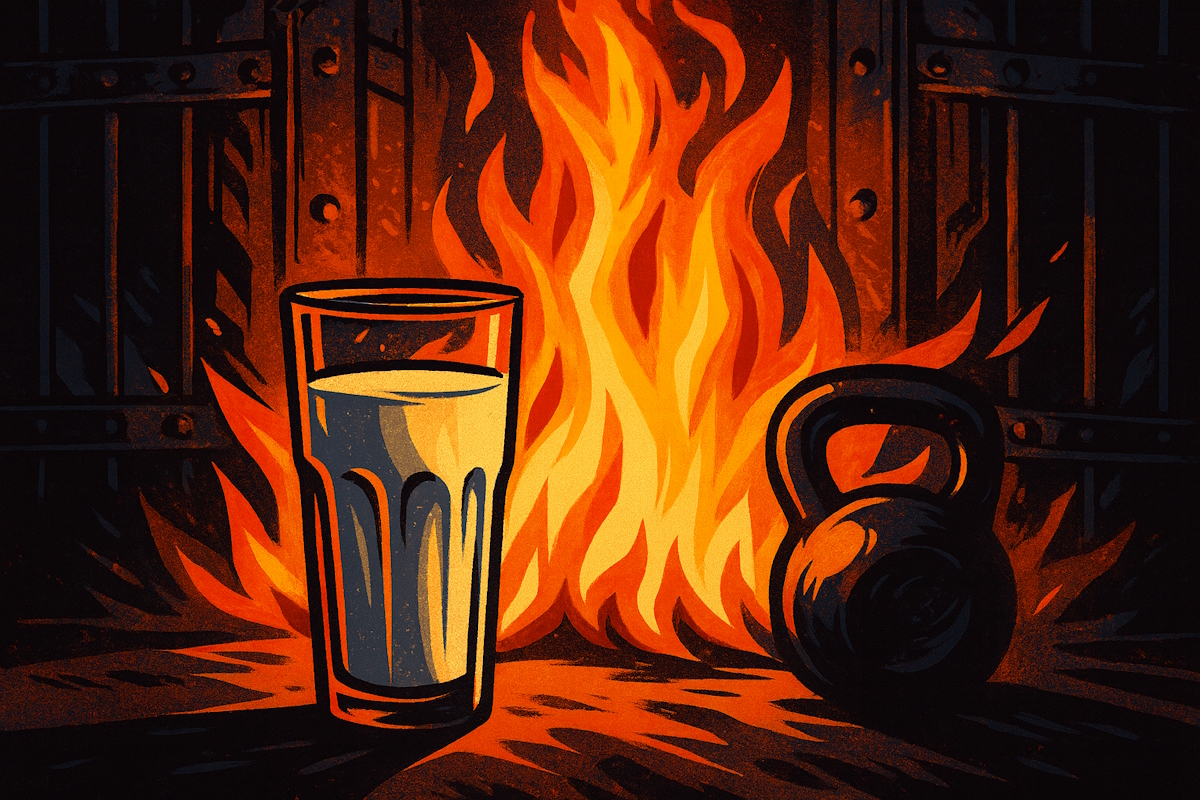
For decades, lifters have argued over the white jug.

Some call it nature’s protein shake.

Others call it bloating in a bottle.

So what’s the truth, brother?

If you’re chasing muscle, performance, and power—you’ve gotta know what’s fueling your engine.

Is milk helping you build size and strength…or holding you back?

The Case For Milk: Nature’s Recovery Drink

Milk’s been a bodybuilding staple since the golden era—Reeves, Park, and Gironda swore by it.

And they weren’t wrong.

Protein Power

Milk delivers two elite proteins: casein and whey.

  • Whey digests fast — a post-lift amino acid flood.
  • Casein digests slow — a drip-feed of muscle fuel for hours.

Together, they form a time-released muscle-growth combo that’s hard to beat.

Research published in The American Journal of Clinical Nutrition (Hartman et al., 2007) found that men who drank milk after resistance training gained significantly more lean muscle than those who used soy or carbs—confirming what lifters have known for decades.

A single cup of whole milk gives you 8 grams of protein and a solid dose of leucine, the amino acid that flips the switch for muscle protein synthesis.

And if you’re wondering why that slow drip matters, classic research by Boirie et al. (1997) showed that casein keeps amino acid levels elevated for hours after ingestion—meaning milk doesn’t just feed your muscles fast, it feeds them long.

Calories for Mass

If you’re struggling to gain size, milk’s a quick calorie weapon.

Whole milk clocks in around 150 calories per cup, making it perfect for shakes and bulking phases.

The legendary GOMAD (Gallon of Milk a Day) protocol—insane? Maybe. Healthy? Probably not. Effective? Absolutely. It’s how many hard gainers finally broke through plateaus.

You’re getting calories, protein, fat, and micronutrients all in one jug. It’s not elegant, but it’s old-school—and it works.

Vitamins & Minerals

Milk’s not just macros—it’s minerals and muscle fuel.

  • Calcium: builds bone and powers contraction.
  • Potassium: restores balance and aids recovery.
  • Vitamin D: supports testosterone and immune strength.

Let’s be real, brother—milk’s a nutrient-dense recovery weapon.

The Case Against Milk: Not All Gains Are Equal

But it’s not all presses and pulls…milk has its pitfalls.

Lactose Intolerance

Some brothers just don’t digest milk well.

If you get gas, bloating, cramping, or gut chaos, it’s not fuel—it’s friction.

Roughly two-thirds of the global population deals with some degree of lactose intolerance, according to Misselwitz et al. (2013).

The solution? Try lactose-free milk, aged cheese, or fermented dairy like Greek yogurt or kefir. They’re easier on digestion and still deliver the anabolic goods.

Insulin Spike

Milk spikes insulin because of its sugar (lactose) and fast-digesting whey content.

That’s fine post-workout, but if you’re constantly sipping milk, it can blunt fat loss and mess with hormone balance.

A study published in the British Journal of Nutrition (Hoyt, Hickey, and Cordain, 2005) showed that both whole and skim milk triggered a disproportionately high insulin response compared to their modest blood-sugar rise. In other words, milk acts more like a “hidden carb”, low on the glycemic index, but high on the insulinemic response chart.

So if you’re deep in a cut or trying to improve insulin sensitivity, treat milk as a post-workout weapon—not an all-day sip. Timing is everything, brother.

Estrogen Concerns

Some worry about estrogenic compounds in conventional dairy.

But most data doesn’t back the fear.

A 2010 analysis by Pape-Zambito and colleagues found that the levels of 17β-estradiol in cow’s milk were far too low to meaningfully affect testosterone in men.

That said, if you’re skeptical or just want cleaner inputs, go organic or grass-fed to play it safe.

Is Organic Milk Better?

You’ve seen it: the halo label, the price bump, the promise of purity.

But is it actually better…or just branding?

Fewer Hormones, Antibiotics, and Pesticides

A 2020 analysis published in Public Health Nutrition found that conventional retail milk contained residues of current-use pesticides and antibiotics, while organic milk samples showed little to none detected (O’Donnell et al., 2020).

That means fewer potential endocrine disruptors and less chemical baggage in your recovery fuel.

In short: if you want to reduce the chemical noise in your system, organic wins the purity test.

Better Omega-3 Profile

Here’s where organic pulls ahead.

A 2013 PLOS ONE study (Benbrook et al.) revealed that organic, grass-fed milk had roughly 50 percent more omega-3 fatty acids and a better omega-3 to omega-6 ratio than standard milk.

That’s huge for the Bodybuilder: omega-3s lower inflammation, support testosterone, and speed recovery.

You’ll pay more, but you’re investing in cleaner, stronger fuel.

Price Tag Reality

You’ll pay more for organic, but nutritionally the protein and calories are nearly identical.

For the budget-minded, regular whole milk still gets the job done.

For long-term health and optimal hormone balance, grass-fed organic is worth the upgrade if you can swing it.

Bodybuilder Application

How to deploy milk like a weapon—not a crutch:

  • Post-Workout: 1–2 cups of whole milk or a milk-based shake for quick recovery.
  • Before Bed: 1-2 cups for slow-digesting casein overnight.
  • Bulking: Use it for calories and convenience.
  • Cutting: Limit it or track tightly—milk calories add up fast.
  • Sensitive gut? Go lactose-free, grass-fed, or swap for Greek yogurt.

Final Verdict: Friend or Foe?

Milk’s a friend—if it fits your mission.

✅ Trying to gain weight? Milk helps.
✅ Need a convenient protein boost? Milk delivers.
❌ Digestive issues? Swap or skip.
❌ Cutting phase? Watch intake.

You don’t need milk to build muscle—but if your body runs clean on it, milk can absolutely be part of your arsenal.

It’s not soft. It’s old-school fuel.

Use it with purpose.

Sources

Hartman, J. W., et al. “Consumption of Fat-Free Milk after Resistance Exercise Promotes Greater Lean Mass Accretion than Soy or Carbohydrate.” The American Journal of Clinical Nutrition, vol. 86, no. 2, 2007, pp. 373–381. https://pubmed.ncbi.nlm.nih.gov/17684208/

Boirie, Y., et al. “Slow and Fast Dietary Proteins Differently Modulate Postprandial Protein Accretion.” Proceedings of the National Academy of Sciences, vol. 94, no. 26, 1997, pp. 14930–14935. https://pubmed.ncbi.nlm.nih.gov/9405716/

Misselwitz, B., et al. “Lactose Intolerance: From Diagnosis to Correct Management.” World Journal of Gastroenterology, vol. 19, no. 42, 2013, pp. 7289–7301. https://pubmed.ncbi.nlm.nih.gov/24443063/

Hoyt, G., M. S. Hickey, and L. Cordain. “Dissociation of the Glycaemic and Insulinaemic Responses to Whole and Skimmed Milk.” British Journal of Nutrition, vol. 93, no. 2, 2005, pp. 175–177. https://pubmed.ncbi.nlm.nih.gov/15788109/

Pape-Zambito, D. A., et al. “Concentrations of 17β-Estradiol in Holstein Whole Milk.” Journal of Dairy Science, vol. 93, no. 6, 2010, pp. 2533–2540. https://pubmed.ncbi.nlm.nih.gov/17582116/

O’Donnell, A. M., et al. “Production-Related Contaminants (Pesticides, Antibiotics, and Growth-Hormone Residues) in Retail Conventional and Organic Milk.” Public Health Nutrition, vol. 23, no. 8, 2020, pp. 1412–1423. https://pubmed.ncbi.nlm.nih.gov/31238996/

Benbrook, C., et al. “Organic Production Enhances Milk Nutritional Profile through Grazing and Forage-Based Feeds.” PLOS ONE, vol. 8, no. 12, 2013, e82429. https://pubmed.ncbi.nlm.nih.gov/24349282/

Why I Left General Fitness Behind (And What I Gained in the Process)

From the Brickyard | Subject: What happened when I left the general approach in the dust

—-

There’s a difference between looking fit and being built.

I didn’t understand that—until I left general fitness behind.

I used to be a “general fitness” guy.

A little lifting. Some running. The occasional HIIT session. Rowing, biking, circuits—whatever sounded good that day.

My diet? Decent. But usually under-eating, always trying to stay “lean.” Sleep? Okay, but never really dialed in.

And it worked—for a while. I was fit.

But here’s the truth:

Fit wasn’t enough.

I didn’t want to just “get by” anymore.

I wanted to look strong. Feel strong. Be strong.

I wanted visible muscle. Definition. Power. Presence.

Not for Instagram.

For me.

The Turning Point

I remember catching my reflection in the gym mirror—fit, but forgettable.

That’s when it hit me: I’d been maintaining, not building.

Around August 2023, I got honest with myself. I realized I’d been tiptoeing around what I really wanted—because it felt selfish, or vain, or like it didn’t fit the “balanced” mold everyone talks about.

But here’s what I’ve learned since: Pursuing safe goals is just as bad as chasing wrong ones.

General fitness felt safe. It let me hide behind variety.

Musclebuilding? That meant picking a target—and hitting it.

So I Throttled Down

Training: From Random to Relentless

Gone was the shotgun approach. I became a sniper.

Weights in heavy doses. Targeted splits. Focused contractions. Volume. Progression. Precision.

Every set mattered. Every rep had purpose.

Nutrition: From Scarcity to Strength

I stopped fearing food. No more tiny meals and chronic deficit mode.

Now I ate to build, not shrink.

Enough protein. Enough carbs. Enough calories.

Lean gains. No fluff.

Sleep: From Optional to Non-Negotiable

Sleep wasn’t a suggestion anymore—it was sacred.

Recovery became the cornerstone.

Because without sleep, there is no growth.

What Happened?

I changed—inside and out.

Physically, I got bigger, leaner, stronger.

Mentally, I gained clarity, confidence, and conviction.

I stopped scattering my energy across ten different goals and finally got results in one.

See, general fitness gives you a little bit of everything.

But musclebuilding? That gives you a lot of one thing—and that’s where transformation happens.

Final Thoughts

At the end of 2023, I asked myself a question: What do I really want?

That’s a dangerous question—if you’re brave enough to answer it.

Too many men never do.

They chase what’s expected. They settle for what’s safe. They quiet the part of themselves that wants more.

But I didn’t want to settle.

I chose muscle.

I chose mission.

I chose to build what most men only dream about.

Brick by brick.

-Brickwall

How to Train and Stimulate Muscle Growth When You Work a Physical Job

How to Train and Stimulate Muscle Growth When You Work a Physical Job

Some days, the grind hits different.

You’ve been on your feet for ten hours—lifting, carrying, sweating, clocking real labor.

You clock out, but your body’s already smoked.

Still, you feel that pull.

The Brickyard’s calling.

You want to train. You need to train.

But if you push too hard, you’ll wreck yourself for work tomorrow.

If you skip too much, you’ll stall out.

That’s the Musclebuilder’s paradox when your job’s physical: how do you train and stimulate muscle growth without burning out?

The Realization

Your job takes energy, but it isn’t structured training.

It’s stress, random, repetitive, and often uneven.

Musclebuilding is different—it’s controlled stress with purpose, form, and progression.

The goal isn’t just to “do more.”

It’s to build in a way that supports muscle growth, strength, and your mission.

This is where smart Musclebuilders separate from the grinders.

Train Smart, Not More

1. Combine and Conquer

If you’re constantly beat down by your job, training six days a week is a fast track to burnout.

Combine your sessions. Train 3–4 days instead of 5–6.

Examples:

  • 3-Day Full Body:
    • Day 1: Push-focused (chest, shoulders, triceps + some legs)
    • Day 2: Pull-focused (back, biceps, traps)
    • Day 3: Full-body strength (squats, deadlifts, carries, core)
  • 4-Day Upper/Lower Split:
    • Day 1: Upper (push + pull, vertical)
    • Day 2: Lower (legs)
    • Day 3: Rest
    • Day 4: Upper (push+ pull, horizontal)
    • Day 5: Lower (lighter, mobility or explosive work)

Fewer sessions. More recovery.

Still stacking bricks.

2. Pinpoint, Every Session

The goal isn’t to do everything—it’s to do what matters.

Go in with precision.

Pick three to four things you’re doing that day and push them hard.

Brickwall’s Pinpoint Rule: “Don’t spread your effort everywhere. Aim it where it matters most. Precision builds the Musclebuilder.”

Every rep has a purpose.

3. Cut Junk Volume

This is related to the point above…but what not to do.

Get in, do what you need to do in a pinpointed fashion, and get out.

Don’t go hitting battle ropes, doing MetCons, or tacking on a bunch of extras.

Cut the junk.

3. Time It Right

Work was brutal? Dial it back.

Hit mobility, light pump work, or skip the day if you’re truly trashed.

You’ll grow more by recovering than forcing junk workouts.

Had an easier shift? That’s when you load it up and push for progression.

Train the body in front of you, not the ghost of your best day.

4. Recover Like It’s Your Job

Sleep is the real anabolic.

Without it, you’re just digging a deeper hole.

Eat enough—especially protein.

You gotta eat…but watch the junk.

Drink water like your gains depend on it (because they do).

Replace minerals and electrolytes lost through sweat.

When you’re wrecked, an extra day off isn’t weakness—it’s wisdom.

Final Word

The Musclebuilder doesn’t just survive his work—he thrives through it.

The gym isn’t extra weight on his shoulders, it’s the forge that makes him unbreakable.

You don’t need to choose between work and the gym.

You can kick ass at both—if you train smart, recover hard, and keep stacking.

The 3 Phases of Musclebuilding

The 3 Phases of Musclebuilding

From the Brickyard | Subject: This is the 3-part journey of the Musclebuilder

——

Every Musclebuilder goes through phases.

It’s not random—it’s built into the process of human adaptation.

The Forge works on a timeline, and if you understand where you are, you’ll know what to expect, how to train, and how to keep building.

Phase 1: The Beginner (0–2 Years)

The Experience:

This is the honeymoon. Gains come easy. Your body has never seen resistance like this, so it responds with rapid muscle growth. You’ll pack on size and strength like crazy—5, 10, even 20 pounds of lean muscle in that first stretch if you do things right.

The Mission:

Don’t waste these golden years chasing fluff. Learn proper form, build strong movement patterns, master tempo, and respect recovery. This is where you lay the foundation. Skip it, and you’ll regret it later.

The Warning:

Beginners often think it’ll always be this easy. It won’t. Enjoy the ride, but don’t get used to it.

Phase 2: The Intermediate (2–5 Years)

The Experience:

Now the easy gains are gone. You’re bigger, you’re stronger, but progress slows. Adding weight to the stack takes weeks, not days. You won’t see the weekly mirror changes anymore.

The Mission:

This is where most quit. The “noob gains” dried up, and the grind sets in. But if you stay locked in—progressive overload, smart nutrition, and consistent sleep—you’ll keep growing. Just slower. A couple pounds of muscle per year is a victory now.

The Reward:

This phase separates the tourists from the lifers. Stay the course and you’ll forge not just a physique, but discipline and grit that carry into every part of life.

Phase 3: The Advanced (5+ Years)

The Experience:

At this stage, you’re close to your natural ceiling. Gains are just about non-existent. The difference between 180 and 185 pounds lean is measured in years, not months. The Forge shifts.

The Mission:

Now it’s not just about building more—it’s about refining, maintaining, and making your body useful. You’ve got the muscle. The question becomes: what can you do with it?

  • Master the kettlebell.
  • Explore martial arts.
  • Carry the load on hikes and rucks.
  • Play with your kids without breaking down.

You’re not just training for looks—you’re living the Musclebuilder life: With presence, strength, and power.

The Reward:

The muscle is yours for life, if you protect it. Training becomes a lifestyle, not a phase. You’ve earned your stripes. If it calls to you, it may be time to spread your knowledge and help other men build.

The Final Word

The 3 phases of Musclebuilding are based on biology. But they’re not just about your body. They’re also about your evolution as a man.

  • The beginner takes advantage of easy growth.
  • The intermediate stays the course and stacks the last bricks.
  • The advanced has mastered the physique, and seeks development in other areas.

No matter where you are on the timeline, your mission stays the same: keep building in some capacity. Don’t quit in Phase 2. Don’t drift in Phase 3. The muscle is just the start—the life you forge with it is the real reward.

Brick by brick.

-Brickwall

Yes, You Can Stimulate Muscle Growth at Planet Fitness, Here’s How

Yes, You Can Stimulate Muscle Growth at Planet Fitness, Here's How

Planet Fitness isn’t a hardcore iron dungeon.

But if you think you can’t build real muscle there, you’re dead wrong.

Yeah, they’ve caught heat—lunk alarms, “no judgment” rules that judged effort, and a vibe that screamed more mall than temple. Fair enough. But things are shifting. Better machines. A more serious crowd. Some gyms even have racks now. And if you walk in with the right mindset? You can get real work done.

Let’s set the record straight: Muscle doesn’t care if it’s forged under a rusty barbell or a shiny chrome machine. It only cares about one thing: tension applied with effort, consistently, over time.

That means:

Planet Fitness allows you to check all those boxes. Good machines, cables, and Smith racks—tools that, if used right, light muscle fibers on fire.

The extras? Open long hours (some 24/7), clean floors, cardio for days, locations everywhere. It’s a purple and yellow training ground where a Musclebuilder can get locked in.

Are there cons? Hell yeah:

  • The crowd? Not all serious.
  • The vibe? Bright. Mall-like.
  • The timing? January turns it into a zoo.

But the Musclebuilder doesn’t fold at obstacles. He adapts. He finds the quiet corners, dials the program, and keeps building.

I’m a Planet Fitness member. A proud one at that. Not because it’s hardcore—but because I know how to make any place work for me. The Planet has more than enough to get the job done.

Sample PF chest/triceps training session:

  • Chest Press Machine – 6×10 (near failure) – 60 seconds rest between sets
  • Cable chest fly or chest fly machine – 6×10 (near failure) – 60 seconds rest between sets
  • Dumbbell overhead triceps extension – 3×10 (near failure) – 60 seconds rest between sets
  • Cable rope press-down – 3×10 (near failure) – 60 seconds rest between sets
  • Finish off with 6x30s (6 rounds of 30 seconds each) rower or elliptical sprints.

That’s beast mode growth stimulation right there, brother.

In the end?

It’s not about where you train.

It’s about how you train.

The Musclebuilder doesn’t wait for perfect conditions. He takes the tools at hand, locks in, and grows.

How the Musclebuilder Checks Form

How the Musclebuilder Checks Form

From the Brickyard | Subject: Form is the foundation, here’s how to check it

——

Form isn’t a suggestion. It’s the foundation.

Bad form is a crack in the armor—one that will eventually shatter under heavy load.

If you want to build, you’ve got to know how to check your form.

Here’s the playbook.

1. The Mirror – Quick, Easy but Limited

  • Use it when: You need instant feedback.
  • Strengths: Easy, accessible, right in front of you.
  • Weaknesses: Limited angles. You can’t see what’s happening behind you or on the subtler details.

Mission Tip: Use it, but don’t hyper-fixate on the mirror. Reps should be focused, not distracted.

2. The Phone – The Tech Audit

  • Use it when: You want easy and real accountability on your big lifts.
  • Strengths: Multiple angles, slow motion, track progress over time.
  • Weaknesses: Some gyms ban filming. Setup can be a hassle.

Mission Tip: Film your more technical lifts regularly (if you can). That’s your form report card.

3. The Buddy – An On-Site Spotter

  • Use it when: You’ve got a partner who knows the game.
  • Strengths: Real-time feedback. Can stop you mid-set if you’re off track.
  • Weaknesses: Only works if your buddy actually understands form. A bad eye gives bad intel.

Mission Tip: Choose someone seasoned, who knows what they’re looking at. Your newb buddy isn’t going to be much help.

4. The Feel – The Internal Sensor

  • Use it when: You’ve built some training years and know your body.
  • Strengths: You can tell if the right muscles are firing. Mind-muscle connection is elite-level awareness.
  • Weaknesses: Beginners often confuse strain with activation.

Mission Tip: Cut out all distraction and really focus between sets, drive home that mind-muscle connection.

5. The Coach – A Professional Audit

  • Use when: You’re ready to invest in precision.
  • Strengths: A trained eye sees what you never will. They can correct small flaws before they become big problems.
  • Weaknesses: It costs money.

Mission Tip: Even one or two sessions can reset your foundation and save years of mistakes.

The Final Word: Audit, Adjust, Attack

Form checks aren’t about obsession. They’re about mission readiness.

Audit yourself. Adjust what needs fixing. Then attack the iron with confidence.

That’s how you build safely. That’s how you build big. That’s how you build forever.

Brick by brick.

-Brickwall

Stabilize or Crumble: The Truth About Optimal Form

Stabilize or Crumble: The Truth About Optimal Form

From the Brickyard | Subject: What you don’t move is just as important as what you do

——

When most people think about form, they focus on what’s moving—activating the right muscles, executing proper technique, feeling the contraction, and controlling the tempo.

And that’s all vital.

But what about what’s not moving?

In other words:

What about the muscles that are working to keep you still? The ones that don’t move—but hold the line so you can?

Let’s take the squat.

You’re obviously moving at the hips, knees, and ankles.

But what shouldn’t be moving?

Your spine.

Your shoulders.

Your elbows.

Your wrists.

If those areas start wiggling or collapsing mid-rep, you’re not just losing power—you’re risking injury.

The unsung heroes here are your stabilizers. They’re working isometrically—contracting without changing length—to lock you into position. Without them, the whole lift falls apart.

So here’s the point:

Stabilization—aka non-movement—is just as important as the movement itself.

If you want clean, powerful, injury-free training, you need to dial in both.

A Challenge for You

Next time you’re under the weight, don’t just think about what’s moving—pay attention to what isn’t.

Ask yourself:

  • What shouldn’t be moving right now?
  • What stabilizers are keeping me locked in?
  • Is anything moving that shouldn’t be?

If the answer to that last one is “yes,” you’ve got work to do.

4 Ways to Train Non-Movement Like a Pro

1. Be More Mindful.

Just becoming aware of the muscles holding you still will instantly level up your form. Don’t zone out—lock in.

2. Train at Your Actual Level.

Leave your ego at the door. If you’re flailing like a marionette with 135 lbs on the bar, drop the weight. Master the movement before you pile on the plates.

3. Fix Muscle Imbalances.

If one side’s pulling more than the other, or if your mobility sucks, you won’t stabilize well. Balance your structure and improve your range—then go heavy.

4. Respect the Process.

This isn’t fluff. This is what keeps you training long-term. This is how you build muscle safely and efficiently—for decades, not just for social media.

Give Non-Movement Its Due

You train to build muscle, move better, and stay bulletproof.

That only happens when you move what should move, and lock down what shouldn’t.

Don’t just chase motion.

Chase mastery.

Brick by brick.

-Brickwall