
Sleep Like a Beast, Grow Like a Monster: The Incredible Importance of Sleep for Building Your Physique

Sleep Like a Beast, Grow Like a Monster: The Incredible Importance of Sleep for Musclebuilding

You tear it down in the gym. You feed it in the kitchen.

But you build it in bed.

Indeed, you don’t grow in the gym. You grow mostly in your sleep. This means that you could train like a savage, eat like a warrior, and dial in every supplement—but if your sleep sucks, your results will too. Sleep isn’t optional. It’s the most anabolic thing you’re not doing enough of.

This isn’t just about recovery—it’s about growth, strength, hormones, energy, and survival.

Let’s break it down.

Recovery Hormones: Growth & Testosterone Happen in the Dark

As I said earlier, muscle tissue doesn’t grow while you’re pushing iron—it grows afterward, during rest. And sleep is the #1 driver of recovery because that’s when your body drops its biggest anabolic bombs.

Growth Hormone:

During deep (slow-wave) sleep, your body releases growth hormone (GH) at its highest levels (Van Cauter et al., 2000)—which drives:

  • Protein synthesis
  • Muscle repair
  • Tissue regeneration
  • Fat metabolism

But skip sleep and you’re choking that flow off at the source.

Less sleep = less GH = weaker recovery and slower gains.

Testosterone:

You already know T is the masculine engine—fuel for size, strength, and sex drive.

But did you know sleep loss tanks it?

In one study, men who slept only 5 hours a night for a week had testosterone levels 10–15% lower than normal (Leproult & Van Cauter, 2011).

Let that sink in: just one bad week, and you’re walking around with the hormonal profile of a man a decade older.

Bottom Line: You can’t be a beast in the gym if you’re a zombie in the bedroom.

Mental Performance: Sleep Sharpens the Sword

Ever tried hitting the gym after just 4 hours of junk sleep?

You’re weaker. Slower. Foggy. Unmotivated.

That’s not a mindset problem. That’s biology kicking your ass.

Sleep deprivation directly wrecks:

  • Reaction time
  • Focus and concentration
  • Cognitive processing speed
  • Coordination and balance
  • Mood and motivation

Research shows it clearly: Poor sleep tanks your brain and your gains.

A 2019 study published in Sports found that reduced sleep quality led to decreased strength, slower reaction times, and lower motivation in trained athletes (Vitale et al., 2019).

Other studies have found that even a single night of sleep loss can impair attention, working memory, and executive function—all critical to athletic and mental performance (Alhola & Polo-Kantola, 2007).

Think Sandow, Mead, Gironda, Reeves—they didn’t build legendary physiques by skipping sleep.

They sharpened the sword. Every damn night.

Sleep and Fat Loss: Your Secret Weapon

Sleep doesn’t just build muscle—it burns fat.

When you don’t sleep enough, your hunger and cravings go berserk. That’s because poor sleep causes:

  • 🔼 Ghrelin (hunger hormone) to rise
  • 🔽 Leptin (satiety hormone) to drop

Result? You eat more, crave junk, and struggle to stop. Especially when cortisol’s jacked up too.

In a landmark study, those who slept less had 22% more ghrelin and 15% less leptin—and were more likely to gain fat (Taheri et al., 2004).

Cutting calories and hitting cardio? Great. But if you’re not sleeping, you’re sabotaging your shred, brother.

Cortisol: The Catabolic Killer

Testosterone and GH aren’t the only hormones at play here. There’s another one lurking in the dark—catabolic, destructive, relentless.

Cortisol.

Sleep deprivation jacks this hormone up, big time.

What is cortisol? It’s a stress hormone that literally breaks down muscle tissue and stores fat, especially around the midsection.

High cortisol = low recovery, high inflammation, low testosterone, and poor sleep…creating a vicious cycle (Spiegel et al., 1999).

Want to kill your gains? Keep pulling all-nighters. Want to build like a machine? Sleep like a baby.

How Much Sleep Do You REALLY Need?

Forget the nonsense of “I get by on 5.” You survive on 5. You don’t thrive.

▶️ Ideal: 7.5 to 9 hours per night.

It’s not just the quantity—it’s the quality too. 9 hours of fitful sleep won’t do jack.

You need full sleep cycles—especially deep sleep (for recovery) and REM (for brain and mood). Interrupted sleep = broken chemistry.

Brickwall’s Sleep Tips for Maximum Sleep Gains:

  • Get morning sunlight daily to reset your clock
  • 📵 No screens 60+ mins before bed (blue light crushes melatonin)
  • 🌑 Keep a dark, cold, quiet room = sleep fortress
  • Keep a regular sleep schedule = stronger circadian rhythm
  • Cut caffeine after 2PM (or even earlier)
  • 📖 Create a wind-down ritual: read, stretch, journal
  • 🌿 Supplements (optional): magnesium, glycine, L-theanine

Brother, This Is Non-Negotiable

Sleep is the anabolic bedrock of everything you’re building.

You can’t out-train a sleep deficit. You can’t out-eat broken recovery. You can’t “grind through” low testosterone and expect greatness.

Etch this into your training journal.

So tonight, skip the scroll. Kill the lights. And let your body rebuild itself into the beast you’re meant to be.

Your Mission:

Tonight, get 8 solid hours. Do it for your muscles. Do it for your mind. Do it for your future.

And tomorrow, hit the gym like a damn wrecking ball.

Sources

Van Cauter, E., Plat, L., & Copinschi, G. (2000). Endocrine Physiology of Sleep. The Journal of Clinical Endocrinology & Metabolism, 85(3), 6664. https://pubmed.ncbi.nlm.nih.gov/10984255/

Leproult, R., & Van Cauter, E. (2011). Effect of 1 Week of Sleep Restriction on Testosterone Levels in Young Healthy Men. JAMA, 305(21), 2173–2174. https://pubmed.ncbi.nlm.nih.gov/21632481/

Vitale, K. C., Owens, R., Hopkins, S. R., & Malhotra, A. (2019). Sleep quality and duration impact performance in elite athletes. Sports, 7(10), 217. https://pubmed.ncbi.nlm.nih.gov/31288293/

Alhola, P., & Polo-Kantola, P. (2007). Sleep deprivation: Impact on cognitive performance. Neuropsychiatric Disease and Treatment, 3(5), 553–567. https://pubmed.ncbi.nlm.nih.gov/19300585/

Spiegel, K., Leproult, R., & Van Cauter, E. (1999). Impact of Sleep Debt on Metabolic and Endocrine Function. The Lancet, 354(9188), 1435–1439. https://pubmed.ncbi.nlm.nih.gov/10543671/

Taheri, S., Lin, L., Austin, D., Young, T., & Mignot, E. (2004). Short Sleep Duration Is Associated with Reduced Leptin, Elevated Ghrelin, and Increased Body Mass Index. PLOS Medicine, 1(3), e62. https://pubmed.ncbi.nlm.nih.gov/15602591/
How to Eat for the Builder Physique

How the Musclebuilder Eats

You want a body that turns heads—and doesn’t break down under pressure. One that performs like a weapon and looks like it was chiseled from stone.

That’s the goal, right?

Then you need a plan that fuels growth without feeding fat.

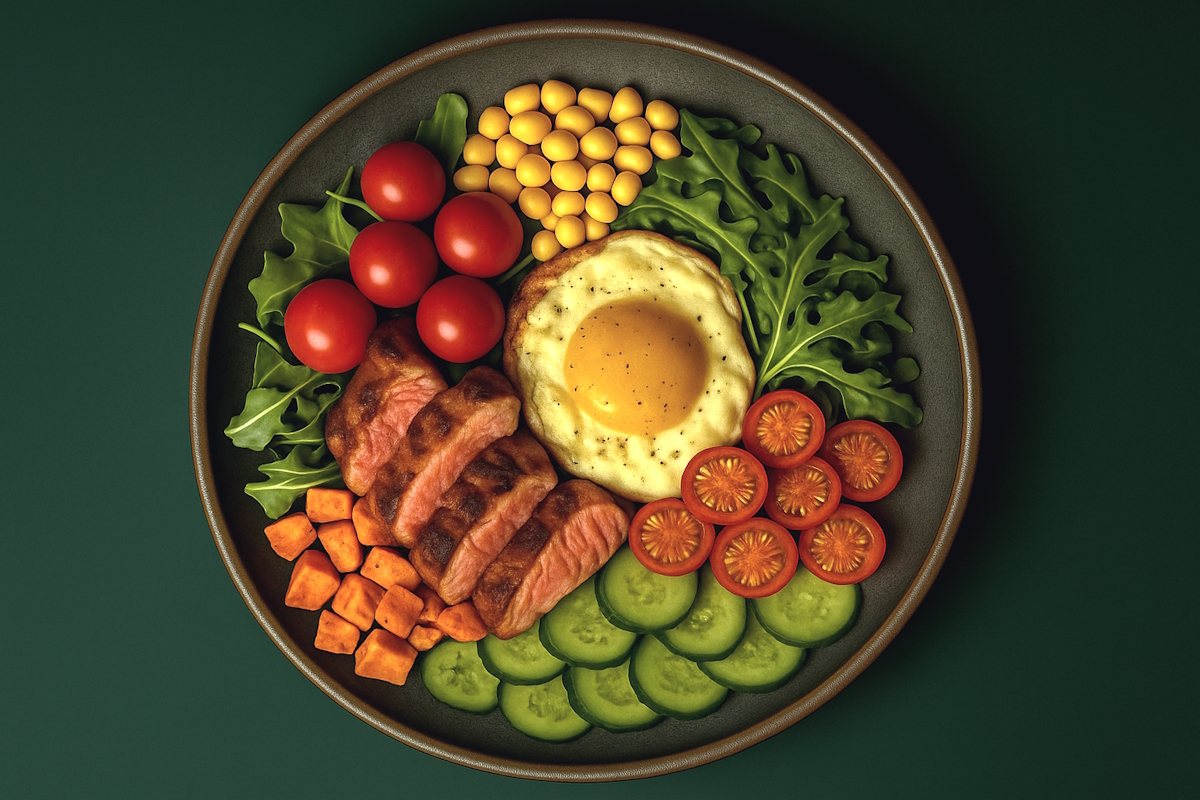
Here’s how to eat like a Builder—muscular, lean, and dialed in.

The Builder Eating Code

Your body’s a fortress. Here’s how to fuel the build:

  1. Lay the Bricks (get your protein)
  2. Fuel the Fire (utilize a sensible calorie surplus)
  3. Cut the Fluff (chisel up occasionally)
  4. Use Fiber as a Weapon (eat your fibrous carbs)
  5. Dominate with Whole Foods (eat more lower-ingredient foods)
  6. Occasionally Flex (indulge in a controlled way)

1. Lay the Bricks: Get Your Protein—Every Damn Day

Protein isn’t optional. It’s the brick and mortar of muscle.

Aim for 0.8–1g of protein per pound of bodyweight daily—and don’t dump it all in one meal. Studies suggest muscle protein synthesis peaks around 0.4g per kg per meal (~30g for most men), so spread your intake over 3–5 meals throughout the day (Jäger et al., 2017).

  • Animal sources: beef, eggs, fish, poultry, dairy (milk, Greek yogurt, cottage cheese).
  • Vegetarian sources: peas, beans, lentils, whole grains.
  • Protein powders and bars can help if you’re not hitting your numbers.

2. Fuel the Fire: Eat Enough—But Don’t Overflow

Muscle needs fuel. But not too much fuel (too much leads to unnecessary fat gain).

Research confirms this—a mild surplus (250–500 calories) is ideal. Without it, gaining serious muscle is tough. But push it too far and you’ll just pack on fat (Murphy & Koehler, 2021).

After protein, here’s how to stack your macros:

  • Fat: Needed for hormones and other important processes. Go for whole milk, eggs, beef, nuts, fish rich in omega-3s.
  • Carbs: You train hard. You need fuel. Think rice, oats, fruits, and veggies.

Keep it sensible and build without ballooning.

3. Cut the Fluff: Chisel Up

You can’t live in a surplus forever. If you do, the scale keeps climbing—and not all of it will be muscle. Eventually, you’ll drift out of that prime body fat range (8–15%) where you look and feel your best.

So when you start looking fluffy, it’s time to chisel up and sharpen your physique. Drop your calories by 250–500 a day. Nothing drastic—just enough to chisel away at the fat while keeping your hard-earned muscle.

Once you’re back in that sweet spot, shift to maintenance or ease back into a surplus and keep building.

4. Use Fiber as a Weapon

Higher-fiber diets help with satiety, blood sugar regulation, and yes—they’re linked to better weight control and lower body fat (Slavin, 2005).

Indeed, fiber slows digestion = stable energy and appetite control.

It also helps your body absorb nutrients better—critical when you’re in build mode.

Shoot for 25–35g of fiber per day, ideally from whole foods like vegetables, fruit, oats, and legumes. This range aligns with recommendations from the Institute of Medicine (2005), which suggests 38g/day for men under 50 and 30g/day for men over 50.

Don’t sleep on fiber, brother. Use this powerful tool.

5. Dominate with Whole Foods—Not Factory Junk

Whole foods keep it real. You know what you’re eating—protein, carbs, fats, fiber, vitamins, minerals. They’re harder to overeat, easier to track, and they give you more muscle-building power per calorie.

Ultra-processed foods…not so much. They’re engineered for cravings, not performance.

In fact, one study found that people eating ultra-processed foods consumed about 500 more calories a day—without even realizing it (Hall et al., 2019). That’s a fast track to fat gain, not muscle.

Cut back on:

  • Seed oils, sugary drinks, baked goods, fast food, frozen meals.
  • Anything with more chemicals than ingredients.

Instead:

  • Stick to foods your great-great-grandfather would recognize—meat, eggs, nuts, fruit, veggies, rice, oats, plain dairy.
  • Build your plate from the ground—not the factory.

6. Indulge With Intention—Then Lock Back In

Yeah, I let loose now and then. You should too.

But if you’re constantly smashing pizza, burgers, ice cream, and candy forget about staying around 8–15% body fat.

Here’s the thing: discipline doesn’t mean perfection. It means control. Own your indulgences—don’t let them own you. So enjoy a break—but keep it controlled.

Enjoy it. Then lock back in.

Bottom Line

Big muscles. Low body fat. It’s not magic—It’s method. It’s discipline, intention, and execution.

Remember:

  • Protein builds.
  • Calories fuel.
  • Fiber controls.
  • Whole foods dominate.

Go as hard in the kitchen as you do in the gym.

Final Thought

This isn’t a diet. It’s a discipline. A way of life for men who build—who lead—who leave a mark.

Sources

Jäger, R., et al. (2017). International Society of Sports Nutrition position stand: Protein and exercise. Journal of the International Society of Sports Nutrition, 14(20). https://pubmed.ncbi.nlm.nih.gov/28642676/

Murphy, C. H., & Koehler, K. (2021). Energy deficiency impairs resistance training gains in lean mass but not strength: A meta-analysis and meta-regression. Sports Medicine, 51(5), 873–891. https://pubmed.ncbi.nlm.nih.gov/34623696/

Slavin, J. L. (2005). Dietary fiber and body weight. Nutrition, 21(3), 411–418. https://pubmed.ncbi.nlm.nih.gov/15797686/

Hall, K. D., et al. (2019). Ultra-processed diets cause excess calorie intake and weight gain: An inpatient randomized controlled trial of ad libitum food intake. Cell Metabolism, 30(1), 67–77.e3. https://pubmed.ncbi.nlm.nih.gov/31105044/

Institute of Medicine. (2005). Dietary Reference Intakes for Energy, Carbohydrate, Fiber, Fat, Fatty Acids, Cholesterol, Protein, and Amino Acids (Macronutrients). The National Academies Press. https://nap.nationalacademies.org/catalog/10490/dietary-reference-intakes-for-energy-carbohydrate-fiber-fat-fatty-acids-cholesterol-protein-and-amino-acids

Tools of the Trade: Power Ranking Gym Implements

Tools of the Trade: Power Ranking Gym Implements for the Musclebuilder

Just like you need a brush to paint, you need your implements, your tools to stimulate hypertrophy.

And like most tools in life, some are better suited for the job than others.

Here’s how I rank the major training implements—based on how well they help you stimulate in a way that’s:

  • Targeted (hits the muscle you actually want to hit)
  • Progressive (lets you add weight as you get stronger over time)
  • Safe (doesn’t wreck your joints or lead to injury)

Let’s roll.

1. Machines and Cables

I, like many, used to scoff at these.

“Machines?! Cables?! Nah, I need to keep it FUNCTIONAL.” Whatever that even meant—because our early ancestors had gyms, right? 😆

But here’s the truth: machines and cables are incredible for targeting the muscles, keeping constant tension, and reducing wear and tear on the joints—especially as you get older and wiser.

Machines these days are better than those of the past. They allow more natural movement, while allowing you lock in, zone in, and dial in your form. You can also go to failure without a spotter, and there’s usually plenty of weight on the stack to get stronger.

Don’t sleep on ‘em brother.

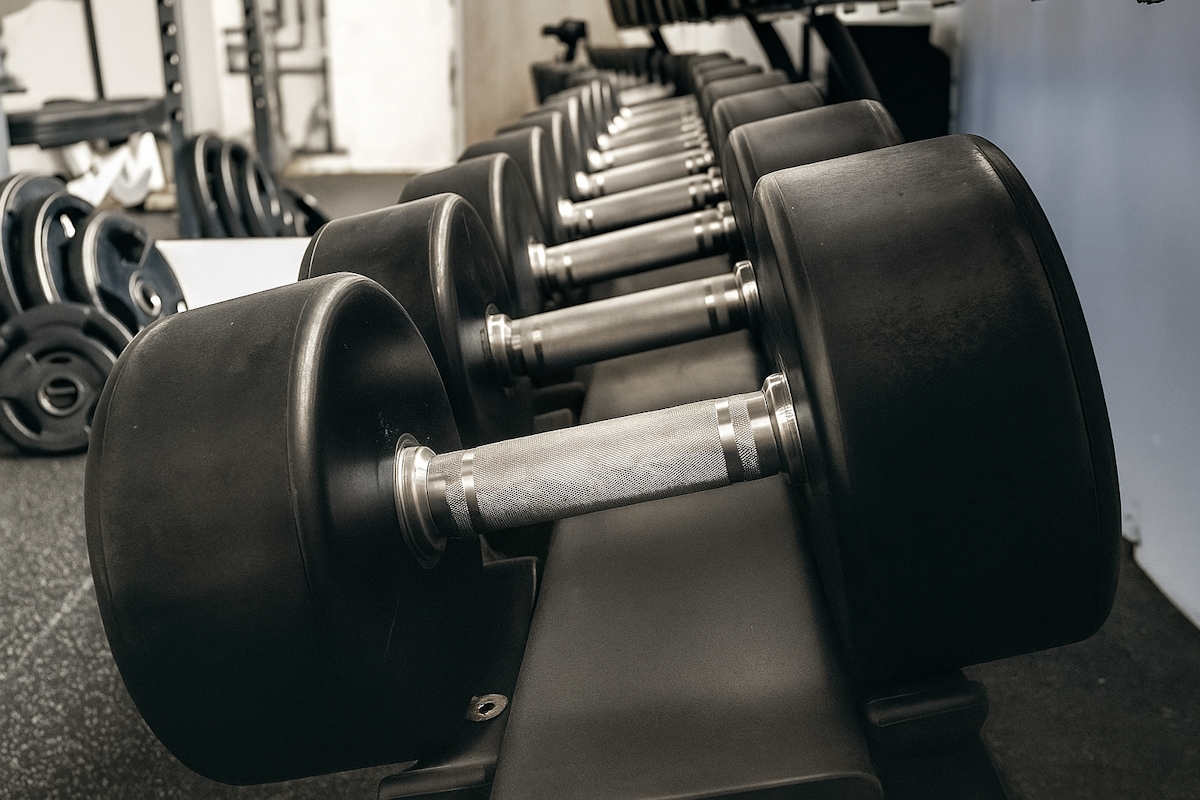
2. Dumbbells

I love dumbbells. Here’s why:

  • You can get full range of motion on most lifts
  • Each side works independently = balanced strength
  • Joints can move naturally = safer and more ergonomic

The drawbacks?

Once you get heavy, getting dumbbells into position (think chest press) can be a pain. And for leg training, they’re just not ideal—you’ll tap out your grip long before your legs are cooked.

Still, they’re versatile, effective, and a staple in any smart program.

3. Barbells

The barbell lets you move a ton of weight. That’s its main superpower.

But it comes with tradeoffs:

  • It forces bilateral movement—your dominant side will likely take over.
  • Not very joint-friendly, especially for long-term use.
  • Less range of motion on some lifts (looking at you, bench press).
  • You need a rack and a bench to get the most benefit.

I still use barbells, but not as often as I used to. I see them as powerful tools for pure strength, but not so much for the targeted, safe overload we want to stimulate hypertrophy after the age of 30.

4. Kettlebells

I love kettlebells—for athleticism, conditioning, and unilateral strength.

But for stimulating muscle growth?

Eh.

They usually jump in large weight increments, they’re tough on the wrists for high-rep sets, and their asymmetrical shape makes precision targeting tricky.

Great for GPP (general physical preparation). Great for a different form of cardio. Not so great for hypertrophy.

💡 Tip: Grab a couple kettlebells and use them for muscle-friendly cardio. Swings, snatches, and clean and jerks done for high reps will jack up your heart rate and make for a wicked good time.

5. Resistance Bands

Bands are awesome for warm-ups, activation, and rehab. But on their own? Not ideal for stimulating muscle growth.

Why?

  • It’s tough to train legs effectively
  • You can’t measure load precisely
  • The resistance isn’t constant—it increases as the band stretches
  • They can snap (never pull one toward your face)

That said—pairing bands with free weights? Now that’s a way to spice up a stale routine or break through a plateau.

When You Don’t Have All the Tools

It’s worth noting—you might not always have access to every piece of equipment on this list.

That doesn’t mean you wait around for perfect conditions.

Building doesn’t happen in a fantasy land. It happens in the real world—where gyms close, life gets chaotic, and sometimes all you’ve got is a pull-up bar, a couple of bands, or your own damn bodyweight.

In those moments, you don’t complain. You adapt and overcome.

That’s the Builder way.

You make do with what you have, and you keep building. Because this isn’t about luxury—it’s about results. And results come to those who refuse to quit.

Final Thoughts

What’s funny is if I wrote this list six years ago, it would’ve looked a lot different.

But that’s growth. You train smarter. You stop chasing trends. You focus on what actually works.

Now it’s your turn, brother. This is my training-tested guide. You need to get out there and test-drive different implements, build your tool chest, and find out what works for you. Build your own power ranking list, and get heavy.

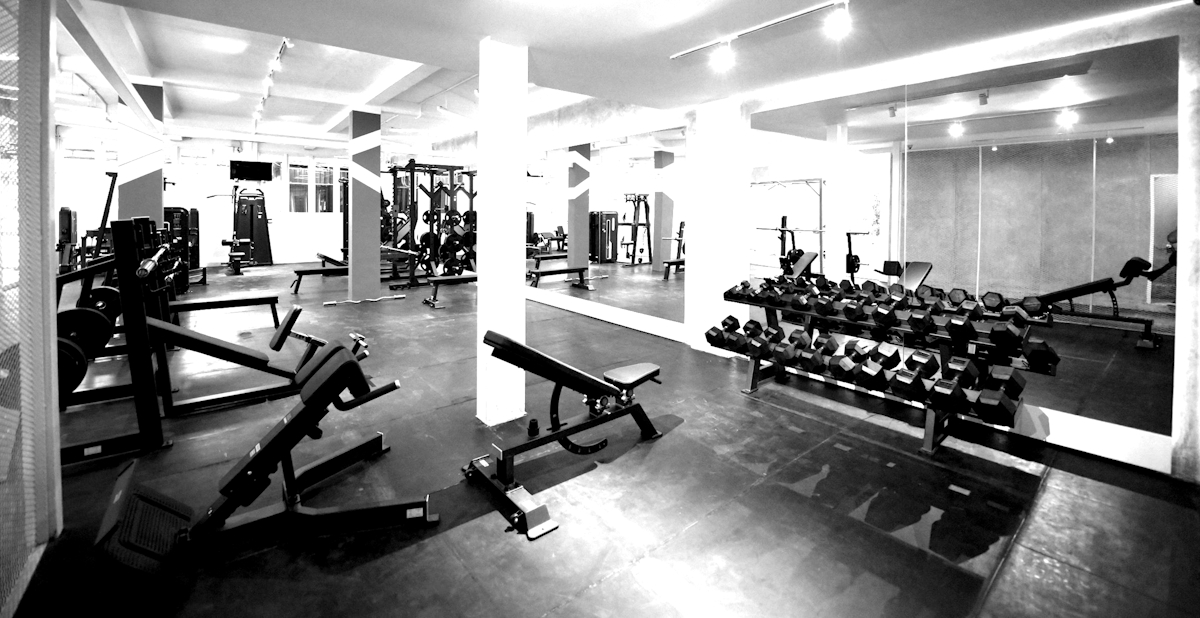
Where to Train: Your Training Ground Is Wherever You Make It

Where to Train: Your Training Ground Is Wherever You Make It

You’ve got three roads to an Iron Temple:

Build a home gym.

Get a commercial gym membership.

Or mix the two and forge your own training ground hybrid.

Which one’s best? That depends on you—your lifestyle, personality, and goals. There’s no “right” answer. But there is a right answer for you.

Ask Yourself:

Where do I feel most comfortable throwing down?

Where can I train the way I want to train?

Where will I enjoy it enough to keep showing up?

Where can I be the most consistent?

Where can I listen to kickass heavy metal and punk rock?

Let’s face it—this isn’t just about picking a place. It’s about building or finding an environment where you can grow. Because consistency beats novelty. And the best setup is the one that keeps you coming back for more.

Commercial Gym: Pros & Cons

Pros:

Access to tons of equipment.

Buzzing atmosphere and high energy.

Built-in social vibe and camaraderie.

Amenities like saunas, pools, and showers.

Cons:

Monthly dues (they can add up).

Crowds during peak hours.

Germs. Sweat. Questionable locker room etiquette.

You’ve got to commute, and wear clothes.

Home Gym: Pros & Cons

Pros:

No waiting, no crowds, no distractions—just you and the iron.

One-time equipment cost, then you’re good for years.

Scream, grunt, blast music—nobody cares.

Ultra convenient. Walk 10 feet and you’re training.

Wear what you want. Or don’t.

Cons:

Limited equipment (unless you’ve got deep pockets and a big garage).

You are the atmosphere. No hype crew.

Harder to “flip the switch” when you’re already at home.

Upfront cost and space commitment.

Easier to get distracted (kids, chores, fridge).

The Verdict?

There is no verdict. This ain’t court—it’s the gym. And the best gym is the one you’ll actually use.

Train where you’re most likely to show up. Train where it lights a fire under your ass. If that’s at home, cool. If it’s the gym, great. If it’s both—welcome to the hybrid life.

Bottom line:

Don’t overthink the setting. Just show up and train hard. The weights don’t care where you lift it—only that you do.

How Gaining Muscle Can Make Your Life Better (In Every Damn Way That Counts)

How Gaining Muscle Can Make Your Life Better (In Every Damn Way That Counts)

Most people think muscle’s just for show.

Just for the mirror. Just for flexing.

They’re wrong. Dead wrong.

Muscle is more than aesthetics—it’s a foundation for a better life.

Brick by brick, rep by rep, it upgrades everything you touch.

Let’s break it down.

1. You’ll Look Better (and Feel It)

Let’s not kid ourselves—looking good matters.

When you build muscle, you fill out your frame, improve your posture, and carry yourself like a man who gives a damn.

People will look at you like you mean business…and you will mean business.

Confidence doesn’t come from a quote. It comes from putting in the work—and seeing it in the mirror.

2. You’ll Think Better

Building your body isn’t just physical. It’s mental warfare.

Every workout trains your focus, sharpens your discipline, and rewires your brain for toughness.

What’s more, studies have shown that resistance training reduces anxiety and depressive symptoms, especially in younger and middle-aged adults (Gordon et al., 2020). That’s real mental armor.

3. You’ll Be Harder to Kill

Literally.

Muscle mass is a strong predictor of survival as you age. In fact, studies have shown that more muscle is linked to lower mortality, especially in older adults (Srikanthan & Karlamangla, 2014).

Muscle also reduces your risk of injury and enhances recovery. Stronger muscles protect your joints, stabilize your movement, and support your bones (Hunter et al., 2004).

And here’s the kicker: movement and muscle preserve your fire across your lifespan (Rolland et al., 2008).

Want to live longer—and better? Build your armor.

4. You’ll Be Stronger (Physically and Otherwise)

Strength changes how you interact with the world.

Suddenly, nothing feels too heavy.

Not your job. Not parenting. Not the day.

You become useful. Capable. A protector. A doer. An ass-kicker.

And that seeps into how you parent, lead, work, and live.

A strong back carries more than weight—it carries responsibility.

5. You’ll Reclaim Something Ancient

Our ancestors didn’t hit the gym—but they were built.

Built from labor, hunts, battle, and purpose.

Today, most men are soft and shrinking—physically and mentally.

Building the physique is our answer, our modern rite of passage, our revolt.

It’s a return to what made men dangerous, dependable, and deeply human.

The Takeaway:

Muscle isn’t a vanity project—it’s a life project.

It improves your confidence, your focus, your health, your capability, your presence, and your damn quality of life.

You’re not just stacking size.

You’re stacking worth—as a man, as a father, as a force to be reckoned with.

Build muscle. Not just for the gains—but for the life it unlocks.

Build your physique. Build your legacy.

Sources

Wolfe RR. The underappreciated role of muscle in health and disease. Am J Clin Nutr. 2006;84(3):475–482. https://pubmed.ncbi.nlm.nih.gov/16960159/

Srikanthan P, Karlamangla AS. Muscle mass index as a predictor of longevity in older adults. Am J Med. 2014;127(6):547–553. https://doi.org/10.1016/j.amjmed.2014.02.007

Gordon BR et al. Resistance exercise training for anxiety and worry symptoms among young adults. Sci Rep. 2020;10(1):17548. https://doi.org/10.1038/s41598-020-74442-2

Hunter GR, McCarthy JP, Bamman MM. Effects of resistance training on older adults. Sports Med. 2004;34(5):329–348. https://doi.org/10.2165/00007256-200434050-00005

Rolland Y, Czerwinski S, Abellan Van Kan G, et al. Sarcopenia: its assessment, etiology, pathogenesis, consequences and future perspectives. J Nutr Health Aging. 2008;12(7):433–450. https://doi.org/10.1007/BF02982704

First Rule: Don’t Get Hurt – How to Keep Training for Life

First Rule: Don’t Get Hurt – How to Keep Training for Life

If you’ve ever been sidelined by an injury, you know the pain isn’t just physical—it’s mental, too. Watching your hard-earned gains fade while you’re stuck on the bench? That’s brutal.

So let’s be real. Injuries suck. They derail progress, kill momentum, and turn passion into frustration. That’s why your first goal as a bodybuilder isn’t just to make gains—it’s to stay in the game.

Now, will training always carry some risk? Yes. But the goal isn’t zero risk—it’s minimal risk. We’re trying to push our limits, not get wrecked by them.

Here’s how to train smart, train long, and avoid the injury trap.

First, What Is an Injury, Really?

An injury is simply damage caused by stress your body wasn’t ready for. Could be sudden—like a muscle tear from too much force. Or it could build up over time—like nagging tendinitis from doing too much without proper recovery.

Either way, the damage is real. And the more we can train intelligently, the less likely we are to end up broken.

Here’s your game plan:

1. Strive for Optimal Form

Not perfect. Optimal. There’s no such thing as flawless technique—but there is a right way to move that puts tension where you want it and keeps vulnerable joints safe.

And listen closely: Injuries often happen when your guard’s down, not during the heavy lift, but when you’re re-racking the weight or picking up a plate.

Don’t just lift with good form—live in good form.

2. Don’t Do Too Much Too Soon

Progress takes time. Trying to jump from A to Z might work once…until it doesn’t. That’s how chronic overuse injuries sneak in. Think stress fractures, tendinopathies, joint flare-ups.

Instead, stack small wins. Go from A to B. Then C. Then D. Boring? Maybe. But effective? Always.

3. Know When to Back Off

Not every session needs to be a PR. Bad sleep, stress, poor nutrition—these things tank recovery and increase injury risk.

Don’t ignore the signals. If your body’s screaming “not today,” it’s smarter to scale back than to power through and pay the price.

A light day today beats three weeks off tomorrow.

4. Don’t Force What Doesn’t Feel Right

We’re all built different. Long limbs, short torsos, past injuries—these things matter. Just because a movement works for someone else doesn’t mean it’s right for you.

Barbell back squats don’t feel right to you? Do dumbbell bench split squats, or try the leg press. Bench pressing bothers your shoulder? Try dumbbells or cables.

You’re here to build muscle—not prove something to your gym bros.

5. Train for the Long Haul

You can go all-out for a few months and see some gains—or you can play the long game and make gains for decades.

This is a lifetime pursuit. We want to be doing this when we’re 60, 70, even 80. So train like someone who plans to be around that long.

And yes, progress requires pushing yourself. But it also means knowing when to push—and when to pull back. That’s the difference between reckless and relentless.

Brickwall’s First Rule: Don’t Get Hurt

Push hard. Train smart. Think big picture.

If you can stay injury-free, you’ll outlast, outlift, and outperform just about everyone around you. Most guys flame out because they don’t respect this rule.

So respect the process. Build slow. And build forever.

Sources

American Academy of Orthopaedic Surgeons (AAOS). Safe Exercise. OrthoInfo. https://orthoinfo.aaos.org/en/staying-healthy/safe-exercise

U.S. Department of Health and Human Services. Physical Activity Guidelines for Americans, 2nd Edition. (2018). PDF Link

Every Training Session Is a Championship Game

Start showing up like it matters—because if you’re serious about building muscle, every single training session does matter.

Think of your training like a championship series. Each workout is a game. Each game affects the final outcome, big time. You only have so much time, you don’t have time to lose. You’ll have a longer career than a pro athlete, but you still need urgency. You don’t have time in the grand scheme of things.

Every training session is a brick. And over time, those bricks build something undeniable. But you need to show up ready to go to stack those bricks.

So prep, train, and recover like a pro.

Show up like it’s the playoffs. Execute like it’s game 7.

Then celebrate like a champion—maybe with a protein shake and a little flex in the mirror.

This isn’t just working out. This is building something championship-worthy.

So what’s it going to be? Next session how are you showing up…like it’s a pickup game? Or game 7?

Building Muscle – What’s Going On Under the Hood? Why Can We Build Muscle? And How to Effectively Build It

Building Muscle - What's Going On Under the Hood? Why Can We Build Muscle? And How to Effectively Build It

Have you ever wondered what’s going on under the hood when it comes to building muscle? And why we can actually build muscle? And also, maybe most importantly, how to effectively build muscle?

That’s what we’re going to dive into.

Let’s peel back the layers, open up the hood, and figure out how this thing works—like we’re wrenching on a ’57 Chevy Bel Air.

Just What the Heck Actually Is Muscle?

Muscle is contractile tissue—a form of soft tissue that your brain commands to pull on your bones via tendons. This is what lets you move at a joint.

Any movement—walking, picking up your kids, or lifting weights—relies on this process.

You can move in many ways, at many speeds, all because of muscle (plus tendons, bones, and other systems, of course).

That’s about as deep in the weeds as we need to go.

Why We Can Build Muscle

We know what muscle is. So why can we get bigger muscles?

It comes down to one word: adaptation.

When you impose stress on your muscles—say, by lifting weights—your body adapts by improving its ability to handle that stress. That’s where hypertrophy (muscle growth) comes in.

What Triggers Muscle Growth?

  • Mechanical tension: Lifting weights or creating strong muscular contractions through a full range of motion.
  • Muscle damage: Microtears can occur from eccentric loading (the lowering part of a lift).
  • Metabolic stress: That burning pump you feel is a buildup of metabolites—lactate, hydrogen ions, etc.—which may contribute to muscle growth.

Note: Current research shows that mechanical tension is the primary driver of hypertrophy. Muscle damage and metabolic stress can support it, but they aren’t essential for growth.

Recovery: Where the Real Growth Happens

All that hard training just sets the stage.

The real magic happens when you’re resting and recovering. This is when your body repairs muscle fibers—and if conditions are right, it overcompensates and builds back bigger and stronger.

But that only happens if:

  • You’re training hard enough to warrant adaptation
  • You’re giving your body the raw materials (food)
  • You’re allowing proper recovery time (low stress, good sleep)

It’s also important to note that muscle growth is slow. You build a tiny bit of muscle after each proper workout. So think in terms of months and years, not days or weeks.

How to Build Muscle Effectively

We’ve covered the what and why. Now here’s the how.

1. Actually Train

A lot of guys at the gym aren’t really training—they’re going through the motions, like they’re browsing Netflix.

Your body resists change. It wants homeostasis (status quo). So to force muscle growth, you’ve got to challenge it hard enough so that it has to respond.

That means:

  • Lifting close to failure
  • Staying mostly in the 3–15 rep range
  • Using sensible rest intervals

You should feel like you’ve been in a fight after a good set. Muscles burning, breathing heavy, face twisted up. If you’ve never let out a few involuntary curses at the end of a set…you’re not there yet.

Bonus: Two Types of Muscle Growth

There are two primary types of hypertrophy:

  • Myofibrillar Hypertrophy: This increases the size and number of the contractile units (myofibrils) in your muscle fibers. It’s associated with strength and density—think powerlifters or gymnasts.
  • Sarcoplasmic Hypertrophy: This increases the volume of fluid and non-contractile elements (like glycogen and sarcoplasm) in the muscle cell. It’s what gives that full, pumped look.

Most well-rounded training stimulates both, but the emphasis depends on how you train:

  • Lower reps (3–6) and heavy weights = more myofibrillar
  • Moderate reps (8–15) with volume = more sarcoplasmic

Want the best results? Blend both styles into your routine. Train heavy some days, and pump up the reps on others…and remember to always use impeccable form any amount of reps you do.

2. Train Consistently

Muscle growth is a compounding process. That means you need consistency.

Like I said earlier, think in terms of months or years.

What about frequency? How many days a week should you train?

3 days is too little, there’s just too much to do. 4 days you’re getting there. Think 5-6 days a week for real results.

Note: This doesn’t mean training each muscle 5–6 times a week. It means hitting certain muscles in turn 5-6 days a week so you can spread your volume out and blast each muscle group throughout the week.

Tip: What matters most is your total weekly volume per muscle (10+ hard sets/week per muscle is a good target). If you choose to train 3 days a week, you’ll have to do a lot more each training session, possibly hindering focus and intensity.

If you think you don’t have the time, then take a long, hard look at what you’re doing throughout the day. You’ve got more time than you think if you cut down TV, scrolling, and texting.

A home gym, a gym at your apartment complex, or a gym at work can also really help in this regard.

3. Eat (Like You Mean It)

Muscle is made of amino acids (protein), and building it requires energy. You must give your body what it needs to grow.

This means:

  • High-protein intake (~0.7–1g per lb of body weight)
  • Carbs and fats for fuel and hormones
  • Micronutrients from whole foods for health and proper function
  • Fiber for digestion and health

Focus on:

  • Meat, eggs, dairy
  • Fruits and vegetables
  • Whole grains
  • Healthy fats and oils

And yes—you can eat cheeseburgers and pizza. Just not only cheeseburgers and pizza.

4. Be in a Slight Calorie Surplus

To build muscle, you need to eat more than you burn—just slightly.

Too little? No growth. Too much? Fat gain.

Stick to a modest daily surplus (200–300 calories above maintenance).

5. Periodically Cut

You can’t bulk up forever, or you’ll end up round and soft.

Cycle in short cutting phases—eat slightly below maintenance to shed body fat while maintaining muscle. Keep training intensity high, and protein up.

6. Live Lower-Stress

Cortisol, the stress hormone, is catabolic—it breaks things down. Chronic high cortisol hinders muscle gain and promotes fat storage.

To reduce cortisol:

  • Sleep more
  • Limit caffeine
  • Manage work and life stress
  • Meditate
  • Chill out and channel Zen Slacker sometimes

Growth hormone and testosterone thrive in low-stress environments.

7. Sleep Like a Champion

If you’re not sleeping 7–9 hours a night, you’re leaving gains on the table.

Sleep supports muscle growth by:

  • Increasing testosterone and growth hormone
  • Repairing muscle tissue
  • Reducing cortisol
  • Restoring mental clarity and drive

Sleep is not optional. It’s the foundation.

Final Word

Building muscle isn’t complicated—but it’s not easy. It takes hard training, focused nutrition, consistent recovery, and discipline over time.

You’ll be sore. You’ll be tired. And you’ll wonder if it’s working.

But one day, you’ll see it. The thicker chest. The bigger arms. The stronger lifts. And it’ll all be worth it.

Do the work. Build the muscle.


Understanding how muscle building works is one thing.

Actually building it—consistently, over time—is another.

Most guys don’t fail because they lack information.

They fail because they lack structure, discipline, and follow-through.

If you’re ready to stop spinning your wheels and start building your physique the right way—that’s exactly what Player Presence Physique Builder is for.

👉 Go to playerpresence.com to learn more.

Sources

Schoenfeld, B. J. (2010). The mechanisms of muscle hypertrophy and their application to resistance training. Journal of Applied Physiology, 108(4), 1–10. https://pubmed.ncbi.nlm.nih.gov/20847704/

Morton, R. W., Murphy, K. T., McKellar, S. R., et al. (2022). A systematic review, meta-analysis and meta-regression of the effect of protein supplementation on resistance training-induced gains in muscle mass and strength in healthy adults. Sports Medicine, 52(5), 1085–1101. https://pubmed.ncbi.nlm.nih.gov/35187864/

Grgic, J., Schoenfeld, B. J., Davies, T. B., & Lazinica, B. (2019). Effects of resistance training frequency on gains in muscular strength: A systematic review and meta-analysis. Sports Medicine, 49(5), 793–807. https://pubmed.ncbi.nlm.nih.gov/30558493/

Dinyer, T. L., et al. (2022). Weekly Sets Per Muscle for Maximizing Muscle Hypertrophy: A Systematic Review and Meta-Analysis. Frontiers in Sports and Active Living. https://www.frontiersin.org/journals/sports-and-active-living/articles/10.3389/fspor.2022.949021/full

Kravitz, L. (n.d.). How Do Muscles Grow? University of New Mexico. https://www.unm.edu/~lkravitz/Article%20folder/musclesgrowLK.html

Walker, M. (2017). Why We Sleep. https://www.sleepdiplomat.com/author