The 10 Worst Foods for Musclebuilders

The 10 Worst Foods for Musclebuilders

Musclebuilders eat differently.

We don’t eat to survive.

We eat to thrive. To perform like it’s gameday (which is every day). To be a presence.

We want to give our bodies what they need to build tissue, recover faster, and stay hormonally intact.

Most of the foods on this list share three traits:

Calorie-dense. Nutrient-poor. Easy to overeat.

That’s a dangerous combination for any man trying to build a physique.

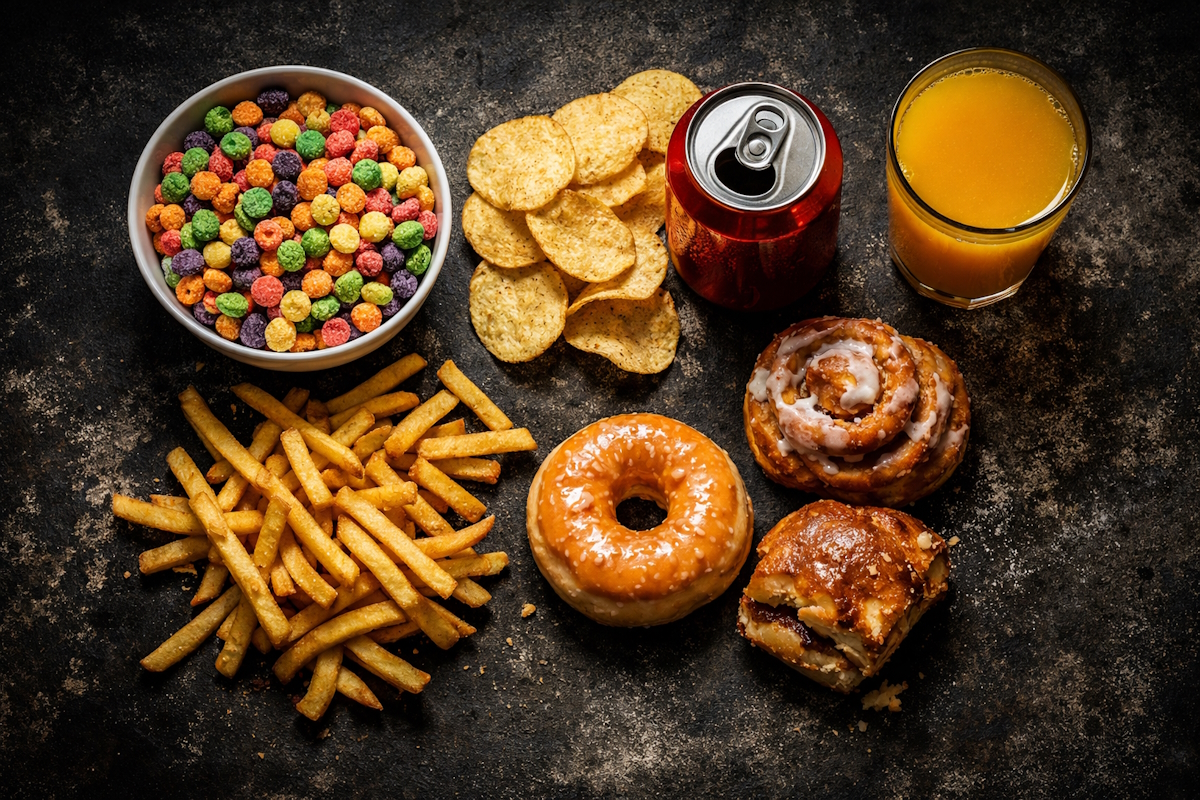
Here are ten foods that quietly sabotage musclebuilders.

1. Cereal

Marketed as part of a complete breakfast.

In reality, it’s a bowl of refined carbohydrates with a vitamin label slapped on it.

  • Refined carbs
  • Minimal protein
  • Virtually no micronutrient density
  • Blood sugar spike → crash → hunger

Verdict: Empty calories dressed up as food.

2. Pasta

Same raw material as cereal. Different shape.

  • Refined flour
  • Low satiety
  • Often sodium-heavy
  • High-calorie, low-satiety carbs that are easy to overconsume

If you need carbs, there are better sources.

Verdict: Cheap fuel, poor return.

3. Soy-Based “Foods”

The debate never ends—and that’s the point.

  • Heavily processed
  • Commonly GMO
  • Questionable hormonal interactions
  • Zero upside compared to animal proteins

Even if the risks are “small,” why take the risk at all?

Verdict: Not worth the squeeze.

4. Licorice

A sneaky one.

  • Can interfere with testosterone regulation
  • Zero performance benefit

Candy with consequences.

Verdict: Anti-androgenic junk.

5. Anything with Hydrogenated Oils (Trans Fats)

This isn’t diet talk. This is health talk.

Hydrogenated oils are artificial fats the human body was never designed to process.

If it’s hydrogenated, it’s dead food.

Verdict: Builds disease, not your physique.

6. Chips

Engineered to be overeaten.

  • High fat
  • High salt
  • Near-zero micronutrients
  • Extremely calorie-dense with almost no nutritional return

Verdict: Crunchy calories, no value.

7. French Fries

In the same boat as chips.

  • Refined carbs
  • Fried in low-quality oils
  • Calorie-dense, nutrient-void
  • Addictive by design

They look harmless. They aren’t.

Verdict: More calories without value.

8. Soda

No nutrients. No value. No upside.

  • Liquid sugar
  • Artificial additives
  • Displaces real food without providing anything in return

Muscle is built from raw materials, not syrups.

Verdict: Severely off mission.

9. Pastries/Baked Desserts

Donuts. Muffins. Cookies.

The perfect storm of refined flour, sugar, and industrial oils.

  • No micronutrients
  • Easy to overeat
  • Hard to recover from

So good, but so bad.

Verdict: Anti–body composition.

10. Fruit Juice

Whole fruit = fine.

Juice = sugar delivery system.

  • No fiber
  • Easy to overconsume
  • Minimal satiety

Almost as bad as soda.

Verdict: Eat food, don’t drink sugar.

The Rule

Don’t ask:

“Can I eat this?”

Instead ask:

“Does this help me build, recover, or stay sharp?”

If the answer is no—it’s not food. It’s noise.

Eat like a Musclebuilder.

Brick by brick.

-Brickwall

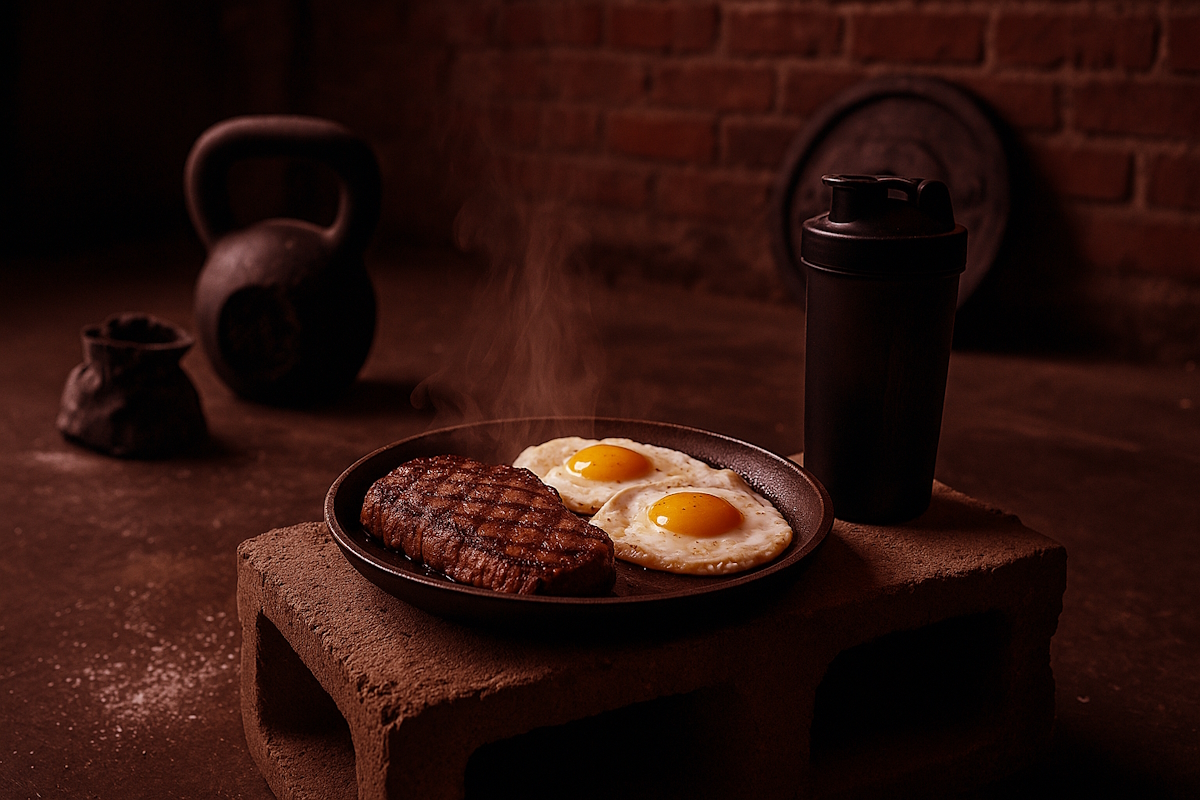
Is Breakfast the Most Important Meal for the Musclebuilder?

Is Breakfast the Most Important Meal for the Musclebuilder?

From the Brickyard | Subject: Breakfast…the most important meal, or marketing hype?

—-

We’ve heard it since we were kids:

“Breakfast is the most important meal of the day!”

But is it really?

Or is it just another old-school slogan people repeat without thinking?

Because here’s the truth:

The Musclebuilder doesn’t live by clichés.

We live by mission.

By intention.

By performance.

By what builds us—not what tradition says.

So let’s break it down.

The Musclebuilder Lens

Most people eat breakfast because someone once slapped a pyramid on a poster in the 90s.

But we’re not “just eat because it’s morning” guys.

We eat with purpose.

We fuel for performance.

We choose meals based on what moves the needle—not what time the clock says.

So the real question is:

Does breakfast help you build muscle, drive focus, and support your mission?

Sometimes the answer is yes.

Sometimes the answer is no.

The Physiology

1. Cortisol Peaks in the Morning

Your cortisol is highest when you wake up.

That’s not bad—it’s a natural “wake up and move” signal.

But eating right on top of a cortisol peak can make some guys sluggish.

For others? It stabilizes them.

This is why breakfast works for some, not all.

2. Muscle Protein Synthesis

You’ve been fasting all night.

Protein availability is low.

A morning protein hit can kickstart repair and growth.

But…

3. Growth Hormone & Fasting

Delaying food—especially carbs—extends the AM growth hormone window.

Some love this.

Some feel flat without food.

Both strategies work depending on your physiology and training.

4. Blood Sugar + Mental Sharpness

High-sugar breakfasts turn grown men into toddlers:

Crash.

Drowsiness.

Zero focus.

But a breakfast built on protein and fat?

Laser-sharp clarity.

Breakfast matters most when the right meal is chosen—not the traditional one.

Which Musclebuilder Are You?

1. The Early Morning Trainer

You’re under the weight by sunrise.

You need fuel.

Best move:

  • 30–40g protein
  • Easy carbs
  • Maybe a little fat

Examples:

  • Eggs + fruit
  • Greek yogurt + honey
  • Whey shake + oats

2. The Late Morning/Afternoon Trainer

You don’t need breakfast unless it helps you mentally.

A small protein hit or delaying the first meal works fine.

You’re not under-fueled—you’re strategically fueled.

3. The “On the Go” Builder

Chaos mornings. Tight schedules.

Your breakfast must be:

  • Portable
  • Repeatable
  • Muscle-focused

Hardboiled eggs.

Greek yogurt.

Protein bars.

Protein shake.

Jerky + berries.

Fast, functional fuel.

When Breakfast Is the Most Important Meal

For the Musclebuilder, breakfast becomes mission-critical when:

  • You train early
  • Your recovery has been slipping
  • You have a high-output physical job
  • You under-eat without it
  • You need stable AM focus

In these scenarios, breakfast can anchor your day.

When Breakfast Is Not Important

Breakfast drops in priority when:

  • You perform well fasted
  • You want mental sharpness
  • You hit protein targets later
  • Your schedule prefers a delayed start

Skipping breakfast is not weakness.

It’s strategy.

The Musclebuilder Breakfast Rules

Rule #1: Protein First

Always.

This is non-negotiable.

Whey.

Eggs.

Greek yogurt.

Cottage cheese.

Leftover steak.

If breakfast isn’t protein-forward, it isn’t for us.

Rule #2: Fat or Carbs Based on the Mission

Training soon?

Add carbs.

Working/creating/teaching?

Add fats.

Not sure?

Go balanced.

Rule #3: No Sugar Bombs

No cereal.

No muffins.

No sludge disguised as food.

You’re a Musclebuilder, not a civilian.

Rule #4: Keep It Simple

Breakfast should be quick, predictable, repeatable—a muscle-focused system.

Power Breakfasts for the Musclebuilder

The Builder Bowl

Eggs, potatoes, peppers, avocado.

The Classic

Greek yogurt + blueberries.

The Easy

2 protein bars + milk

The 3-Minute Shake

Whey, creatine, banana, oats.

The Tactical

Cottage cheese + almonds + fruit.

The On-the-Go

Hardboiled eggs + jerky + apple.

All Musclebuilder-approved.

All under 5 minutes.

No nonsense.

So…Is Breakfast the Most Important Meal?

For normies:

Maybe.

For the Musclebuilder:

It depends on your mission.

Breakfast isn’t inherently the most important meal.

Your most important meal is the one that pushes you forward:

  • The one that fuels your training.
  • The one that supports your recovery.
  • The one that helps you think clearly, move strongly, and build consistently.

Breakfast can be a powerful tool—but not a sacred cow.

Final Word: Mission > Meal

You’re not living by outdated slogans.

You’re building a life.

You’re building a body.

You’re building a purpose.

Breakfast isn’t the king.

Your mission is.

Eat with intention.

Fuel with purpose.

Build with wisdom.

Brick by brick.

-Brickwall

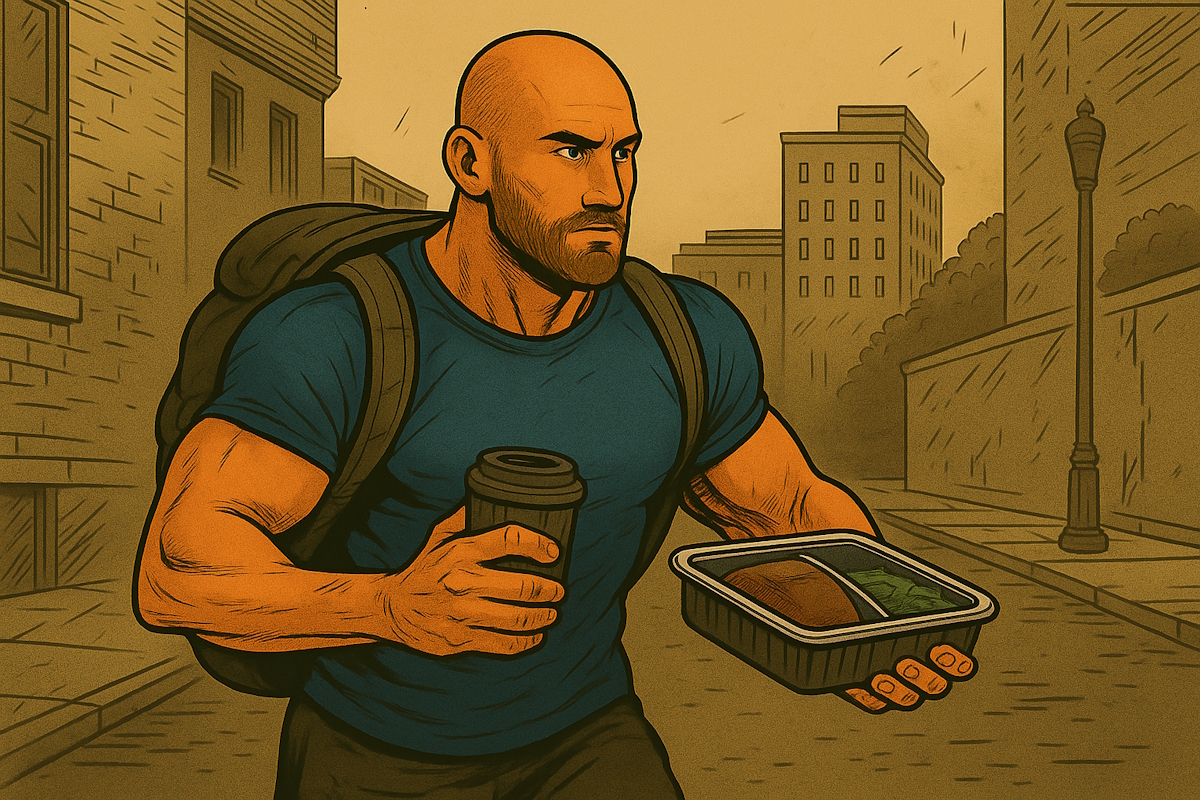
How Musclebuilders Eat On the Go

How Musclebuilders Eat On the Go

From the Brickyard | Subject: How to not let your diet go to crap when you’re on the go

—-

There’s a lie most men live with:

“If life gets busy, nutrition has to fall apart.”

Work ramps up. Driving all day. Classes. Kids. Dates. Errands. Stress.

So they default to fast food, cheap snacks, soda, junk calories, and the slow decay of their body and identity.

But you?

You’re not “most men.”

You’re a Musclebuilder.

You’re a man with a mission.

A man becoming forged, not softened.

A man shaping his body to match his spirit.

The Musclebuilder plans ahead because the mission matters.

We don’t “wing it.”

We prepare.

We stock.

We load out.

When you live like a weapon, you fuel like a weapon.

The Musclebuilder Mindset: Prepare or Pay

There’s only one rule you need to internalize:

If you don’t plan your food, someone else will choose it for you.

And that “someone else” usually doesn’t care about your health, physique, and performance.

So we keep it simple:

  • Protein first (keeps you full, recovers muscle, stabilizes mood)
  • Clean fats second (stable energy, brain on, hormones supported)
  • Carbs when earned (activity-driven, not boredom-driven)

Eat like a man who builds—not a man who drifts.

The Musclebuilder On-the-Go Loadout

1. Meat + Veggie Containers

This is the bread-and-butter move.

Cook once. Eat 2–4 times.

  • Steak strips + broccoli
  • Chicken thighs + spinach
  • Salmon + asparagus

Pack in glass or BPA-free containers.

Throw one in your bag.

No excuses.

Tip: Salt it. Season it. Spice it. Make it something you want to eat.

2. Hard-Boiled Eggs

Cheap. Dense in protein. Minimal prep.

  • Boil a dozen on Sunday
  • Grab 3–4 whenever you leave the house

Salt + pepper packs in your glovebox are a pro move.

3. Nuts

Not a main meal—just strategic ammo.

  • Almonds
  • Walnuts
  • Cashews
  • Pistachios

Satiating. Calorie dense. Easy.

Small handfuls—not free-pour insanity.

4. Dried Fruit (Controlled)

Quick carbs + micronutrients.

Great for:

  • Post-training
  • On a hike
  • When you’re moving

Bad for:

  • Sitting on the couch

Portion it first. Don’t trust your caveman brain.

5. Jerky or Meat Sticks

High protein. Portable. But read the damn ingredients.

Avoid:

  • Soy protein isolate
  • Corn syrup
  • “Natural flavors”
  • Excess sodium
  • Seed oil marinades

Look for:

  • Beef
  • Salt
  • Herbs
  • Maybe honey

If you can’t pronounce it, don’t put it in your bloodstream.

6. Protein Bars

There are good bars, and lab-designed candy bricks disguised as health food.

Look for:

  • Egg white protein
  • Whey concentrate
  • Nuts and honey

Avoid:

  • Soy protein isolate
  • Sugar alcohols
  • “High fiber” bars that destroy your gut
  • Palm oil sludge

If the ingredients list is longer than your grocery receipt, skip it.

Master Move: Create Your EDC Fuel Kit

This lives in your backpack, car, or desk drawer:

  • Jerky sticks
  • Nuts
  • A foldable fork
  • Sea salt mini shaker
  • Electrolyte packets
  • Protein powder in a shaker cup (dry)

This makes you hard to break.

Hard to tempt.

Hard to derail.

This makes you dangerous.

The Real Reason This Matters

This isn’t about snacks.

This is about identity.

When life speeds up, most men let their standards collapse.

The Musclebuilder does the opposite.

When life gets chaotic, he locks in harder.

When others panic, he stays prepared.

When others drift, he builds.

Remember This

Your nutrition is not random.

Your physique is not an accident.

Your discipline is not negotiable.

You’re building.

Brick by brick.

-Brickwall

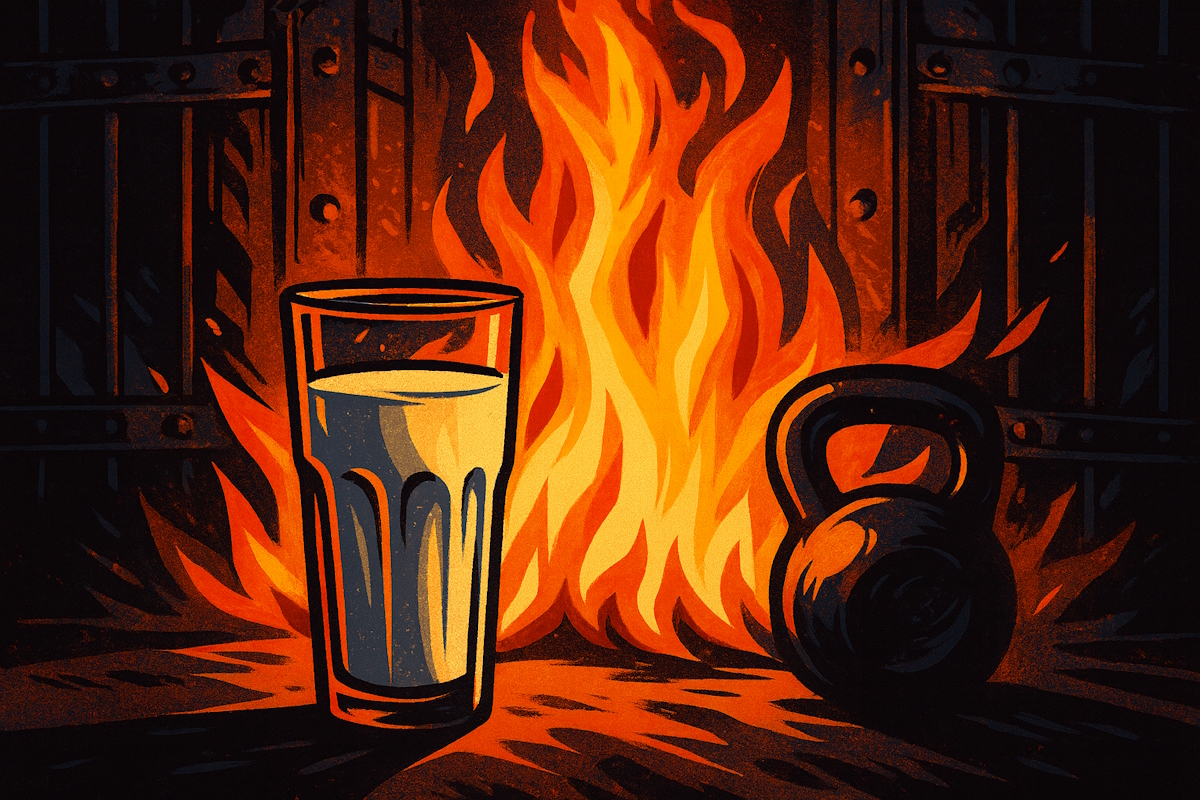
Milk: Friend or Foe for the Musclebuilder?

Milk: Friend or Foe for the Musclebuilder?

From the Brickyard | Subject: The truth about milk and muscle

——

For decades, lifters have argued over the white jug.

Some call it nature’s protein shake.

Others call it bloating in a bottle.

So what’s the truth, brother?

If you’re chasing muscle, performance, and power—you’ve gotta know what’s fueling your engine.

Is milk helping you build size and strength…or holding you back?

The Case For Milk: Nature’s Recovery Drink

Milk’s been a bodybuilding staple since the golden era—Reeves, Park, and Gironda swore by it.

And they weren’t wrong.

Protein Power

Milk delivers two elite proteins: casein and whey.

  • Whey digests fast — a post-lift amino acid flood.
  • Casein digests slow — a drip-feed of muscle fuel for hours.

Together, they form a time-released muscle-growth combo that’s hard to beat.

Research published in The American Journal of Clinical Nutrition (Hartman et al., 2007) found that men who drank milk after resistance training gained significantly more lean muscle than those who used soy or carbs—confirming what lifters have known for decades.

A single cup of whole milk gives you 8 grams of protein and a solid dose of leucine, the amino acid that flips the switch for muscle protein synthesis.

And if you’re wondering why that slow drip matters, classic research by Boirie et al. (1997) showed that casein keeps amino acid levels elevated for hours after ingestion—meaning milk doesn’t just feed your muscles fast, it feeds them long.

Calories for Mass

If you’re struggling to gain size, milk’s a quick calorie weapon.

Whole milk clocks in around 150 calories per cup, making it perfect for shakes and bulking phases.

The legendary GOMAD (Gallon of Milk a Day) protocol—insane? Maybe. Healthy? Probably not. Effective? Absolutely. It’s how many hard gainers finally broke through plateaus.

You’re getting calories, protein, fat, and micronutrients all in one jug. It’s not elegant, but it’s old-school—and it works.

Vitamins & Minerals

Milk’s not just macros—it’s minerals and muscle fuel.

  • Calcium: builds bone and powers contraction.
  • Potassium: restores balance and aids recovery.
  • Vitamin D: supports testosterone and immune strength.

Let’s be real, brother—milk’s a nutrient-dense recovery weapon.

The Case Against Milk: Not All Gains Are Equal

But it’s not all presses and pulls…milk has its pitfalls.

Lactose Intolerance

Some brothers just don’t digest milk well.

If you get gas, bloating, cramping, or gut chaos, it’s not fuel—it’s friction.

Roughly two-thirds of the global population deals with some degree of lactose intolerance, according to Misselwitz et al. (2013).

The solution? Try lactose-free milk, aged cheese, or fermented dairy like Greek yogurt or kefir. They’re easier on digestion and still deliver the anabolic goods.

Insulin Spike

Milk spikes insulin because of its sugar (lactose) and fast-digesting whey content.

That’s fine post-workout, but if you’re constantly sipping milk, it can blunt fat loss and mess with hormone balance.

A study published in the British Journal of Nutrition (Hoyt, Hickey, and Cordain, 2005) showed that both whole and skim milk triggered a disproportionately high insulin response compared to their modest blood-sugar rise. In other words, milk acts more like a “hidden carb”, low on the glycemic index, but high on the insulinemic response chart.

So if you’re deep in a cut or trying to improve insulin sensitivity, treat milk as a post-workout weapon—not an all-day sip. Timing is everything, brother.

Estrogen Concerns

Some worry about estrogenic compounds in conventional dairy.

But most data doesn’t back the fear.

A 2010 analysis by Pape-Zambito and colleagues found that the levels of 17β-estradiol in cow’s milk were far too low to meaningfully affect testosterone in men.

That said, if you’re skeptical or just want cleaner inputs, go organic or grass-fed to play it safe.

Is Organic Milk Better?

You’ve seen it: the halo label, the price bump, the promise of purity.

But is it actually better…or just branding?

Fewer Hormones, Antibiotics, and Pesticides

A 2020 analysis published in Public Health Nutrition found that conventional retail milk contained residues of current-use pesticides and antibiotics, while organic milk samples showed little to none detected (O’Donnell et al., 2020).

That means fewer potential endocrine disruptors and less chemical baggage in your recovery fuel.

In short: if you want to reduce the chemical noise in your system, organic wins the purity test.

Better Omega-3 Profile

Here’s where organic pulls ahead.

A 2013 PLOS ONE study (Benbrook et al.) revealed that organic, grass-fed milk had roughly 50 percent more omega-3 fatty acids and a better omega-3 to omega-6 ratio than standard milk.

That’s huge for the Musclebuilder: omega-3s lower inflammation, support testosterone, and speed recovery.

You’ll pay more, but you’re investing in cleaner, stronger fuel.

Price Tag Reality

You’ll pay more for organic, but nutritionally the protein and calories are nearly identical.

For the budget-minded, regular whole milk still gets the job done.

For long-term health and optimal hormone balance, grass-fed organic is worth the upgrade if you can swing it.

Musclebuilder Application

How to deploy milk like a weapon—not a crutch:

  • Post-Workout: 1–2 cups of whole milk or a milk-based shake for quick recovery.
  • Before Bed: 1-2 cups for slow-digesting casein overnight.
  • Bulking: Use it for calories and convenience.
  • Cutting: Limit it or track tightly—milk calories add up fast.
  • Sensitive gut? Go lactose-free, grass-fed, or swap for Greek yogurt.

Final Verdict: Friend or Foe?

Milk’s a friend—if it fits your mission.

✅ Trying to gain weight? Milk helps.
✅ Need a convenient protein boost? Milk delivers.
❌ Digestive issues? Swap or skip.
❌ Cutting phase? Watch intake.

You don’t need milk to build muscle—but if your body runs clean on it, milk can absolutely be part of your arsenal.

It’s not soft. It’s old-school fuel.

Use it with purpose.

Brick by Brick.

-Brickwall

Sources

Hartman, J. W., et al. “Consumption of Fat-Free Milk after Resistance Exercise Promotes Greater Lean Mass Accretion than Soy or Carbohydrate.” The American Journal of Clinical Nutrition, vol. 86, no. 2, 2007, pp. 373–381. https://pubmed.ncbi.nlm.nih.gov/17684208/

Boirie, Y., et al. “Slow and Fast Dietary Proteins Differently Modulate Postprandial Protein Accretion.” Proceedings of the National Academy of Sciences, vol. 94, no. 26, 1997, pp. 14930–14935. https://pubmed.ncbi.nlm.nih.gov/9405716/

Misselwitz, B., et al. “Lactose Intolerance: From Diagnosis to Correct Management.” World Journal of Gastroenterology, vol. 19, no. 42, 2013, pp. 7289–7301. https://pubmed.ncbi.nlm.nih.gov/24443063/

Hoyt, G., M. S. Hickey, and L. Cordain. “Dissociation of the Glycaemic and Insulinaemic Responses to Whole and Skimmed Milk.” British Journal of Nutrition, vol. 93, no. 2, 2005, pp. 175–177. https://pubmed.ncbi.nlm.nih.gov/15788109/

Pape-Zambito, D. A., et al. “Concentrations of 17β-Estradiol in Holstein Whole Milk.” Journal of Dairy Science, vol. 93, no. 6, 2010, pp. 2533–2540. https://pubmed.ncbi.nlm.nih.gov/17582116/

O’Donnell, A. M., et al. “Production-Related Contaminants (Pesticides, Antibiotics, and Growth-Hormone Residues) in Retail Conventional and Organic Milk.” Public Health Nutrition, vol. 23, no. 8, 2020, pp. 1412–1423. https://pubmed.ncbi.nlm.nih.gov/31238996/

Benbrook, C., et al. “Organic Production Enhances Milk Nutritional Profile through Grazing and Forage-Based Feeds.” PLOS ONE, vol. 8, no. 12, 2013, e82429. https://pubmed.ncbi.nlm.nih.gov/24349282/
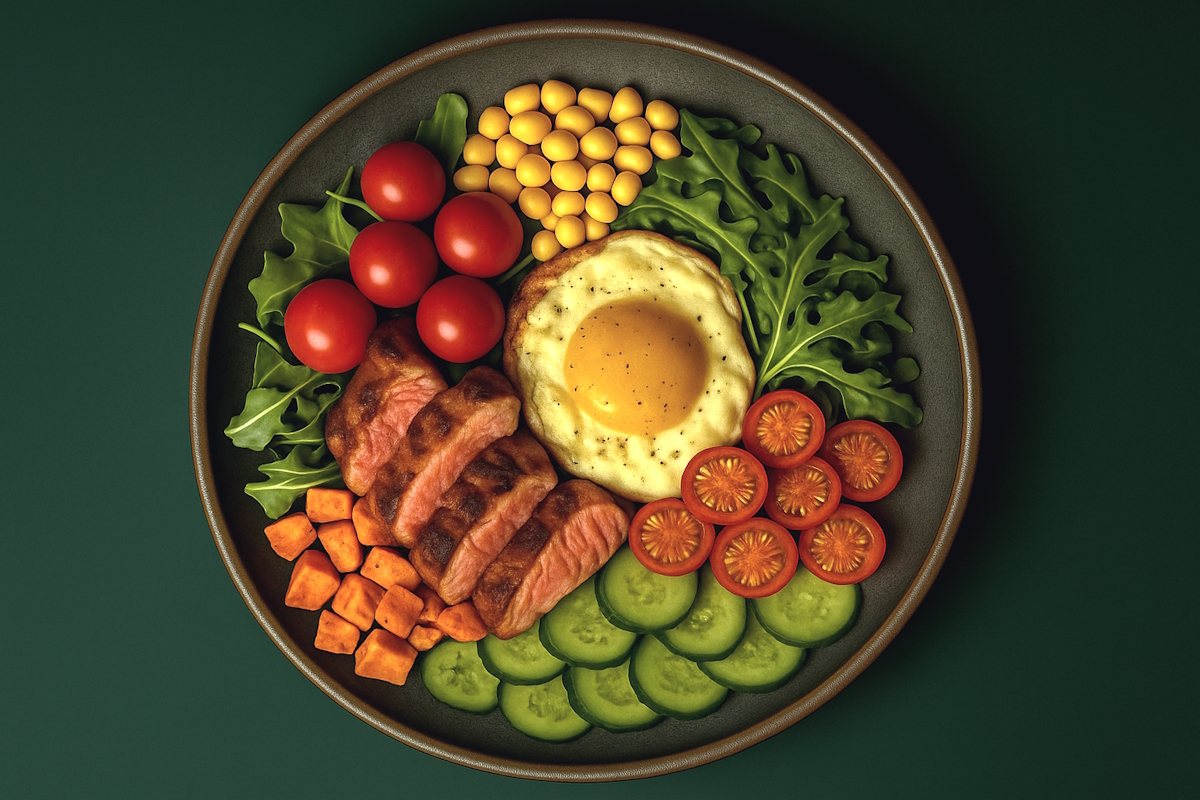
How the Musclebuilder Eats

How the Musclebuilder Eats

You want a body that turns heads—and doesn’t break down under pressure. One that performs like a weapon and looks like it was chiseled from stone.

That’s the goal, right?

Then you need a plan that fuels growth without feeding fat.

Here’s how to eat like a Musclebuilder—muscular, lean, and dialed in.

The Musclebuilder Eating Code

Your body’s a fortress. Here’s how to fuel the build:

  1. Lay the Bricks (get your protein)
  2. Fuel the Fire (utilize a sensible calorie surplus)
  3. Cut the Fluff (chisel up occasionally)
  4. Use Fiber as a Weapon (eat your fibrous carbs)
  5. Dominate with Whole Foods (eat more lower-ingredient foods)
  6. Occasionally Flex (indulge in a controlled way)

1. Lay the Bricks: Get Your Protein—Every Damn Day

Protein isn’t optional. It’s the brick and mortar of muscle.

Aim for 0.8–1g of protein per pound of bodyweight daily—and don’t dump it all in one meal. Studies suggest muscle protein synthesis peaks around 0.4g per kg per meal (~30g for most men), so spread your intake over 3–5 meals throughout the day (Jäger et al., 2017).

  • Animal sources: beef, eggs, fish, poultry, dairy (milk, Greek yogurt, cottage cheese).
  • Vegetarian sources: peas, beans, lentils, whole grains.
  • Protein powders and bars can help if you’re not hitting your numbers.

2. Fuel the Fire: Eat Enough—But Don’t Overflow

Muscle needs fuel. But not too much fuel. This is musclebuilding, not fatbuilding.

Research confirms this—a mild surplus (250–500 calories) is ideal. Without it, gaining serious muscle is tough. But push it too far and you’ll just pack on fat (Murphy & Koehler, 2021).

After protein, here’s how to stack your macros:

  • Fat: Needed for hormones and other important processes. Go for whole milk, eggs, beef, nuts, fish rich in omega-3s.
  • Carbs: You train hard. You need fuel. Think rice, oats, fruits, and veggies.

Keep it sensible and build without ballooning.

3. Cut the Fluff: Chisel Up

You can’t live in a surplus forever. If you do, the scale keeps climbing—and not all of it will be muscle. Eventually, you’ll drift out of that prime body fat range (8–15%) where you look and feel your best.

So when you start looking fluffy, it’s time to chisel up and sharpen your physique. Drop your calories by 250–500 a day. Nothing drastic—just enough to chisel away at the fat while keeping your hard-earned muscle.

Once you’re back in that sweet spot, shift to maintenance or ease back into a surplus and keep building.

4. Use Fiber as a Weapon

Higher-fiber diets help with satiety, blood sugar regulation, and yes—they’re linked to better weight control and lower body fat (Slavin, 2005).

Indeed, fiber slows digestion = stable energy and appetite control.

It also helps your body absorb nutrients better—critical when you’re in build mode.

Shoot for 25–35g of fiber per day, ideally from whole foods like vegetables, fruit, oats, and legumes. This range aligns with recommendations from the Institute of Medicine (2005), which suggests 38g/day for men under 50 and 30g/day for men over 50.

Don’t sleep on fiber, brother. Use this powerful tool.

5. Dominate with Whole Foods—Not Factory Junk

Whole foods keep it real. You know what you’re eating—protein, carbs, fats, fiber, vitamins, minerals. They’re harder to overeat, easier to track, and they give you more muscle-building power per calorie.

Ultra-processed foods…not so much. They’re engineered for cravings, not performance.

In fact, one study found that people eating ultra-processed foods consumed about 500 more calories a day—without even realizing it (Hall et al., 2019). That’s a fast track to fat gain, not muscle.

Cut back on:

  • Seed oils, sugary drinks, baked goods, fast food, frozen meals.
  • Anything with more chemicals than ingredients.

Instead:

  • Stick to foods your great-great-grandfather would recognize—meat, eggs, nuts, fruit, veggies, rice, oats, plain dairy.
  • Build your plate from the ground—not the factory.

6. Indulge With Intention—Then Lock Back In

Yeah, I let loose now and then. You should too.

But if you’re constantly smashing pizza, burgers, ice cream, and candy forget about staying around 8–15% body fat.

Here’s the thing: discipline doesn’t mean perfection. It means control. Own your indulgences—don’t let them own you. So enjoy a break—but keep it controlled.

Enjoy it. Then lock back in.

Bottom Line

Big muscles. Low body fat. It’s not magic—It’s method. It’s discipline, intention, and execution.

Remember:

  • Protein builds.
  • Calories fuel.
  • Fiber controls.
  • Whole foods dominate.

Go as hard in the kitchen as you do in the gym.

Final Thought

This isn’t a diet. It’s a discipline. A way of life for men who build—who lead—who leave a mark.

This is how the Musclebuilder eats.

Sources

Jäger, R., et al. (2017). International Society of Sports Nutrition position stand: Protein and exercise. Journal of the International Society of Sports Nutrition, 14(20). https://pubmed.ncbi.nlm.nih.gov/28642676/

Murphy, C. H., & Koehler, K. (2021). Energy deficiency impairs resistance training gains in lean mass but not strength: A meta-analysis and meta-regression. Sports Medicine, 51(5), 873–891. https://pubmed.ncbi.nlm.nih.gov/34623696/

Slavin, J. L. (2005). Dietary fiber and body weight. Nutrition, 21(3), 411–418. https://pubmed.ncbi.nlm.nih.gov/15797686/

Hall, K. D., et al. (2019). Ultra-processed diets cause excess calorie intake and weight gain: An inpatient randomized controlled trial of ad libitum food intake. Cell Metabolism, 30(1), 67–77.e3. https://pubmed.ncbi.nlm.nih.gov/31105044/

Institute of Medicine. (2005). Dietary Reference Intakes for Energy, Carbohydrate, Fiber, Fat, Fatty Acids, Cholesterol, Protein, and Amino Acids (Macronutrients). The National Academies Press. https://nap.nationalacademies.org/catalog/10490/dietary-reference-intakes-for-energy-carbohydrate-fiber-fat-fatty-acids-cholesterol-protein-and-amino-acids