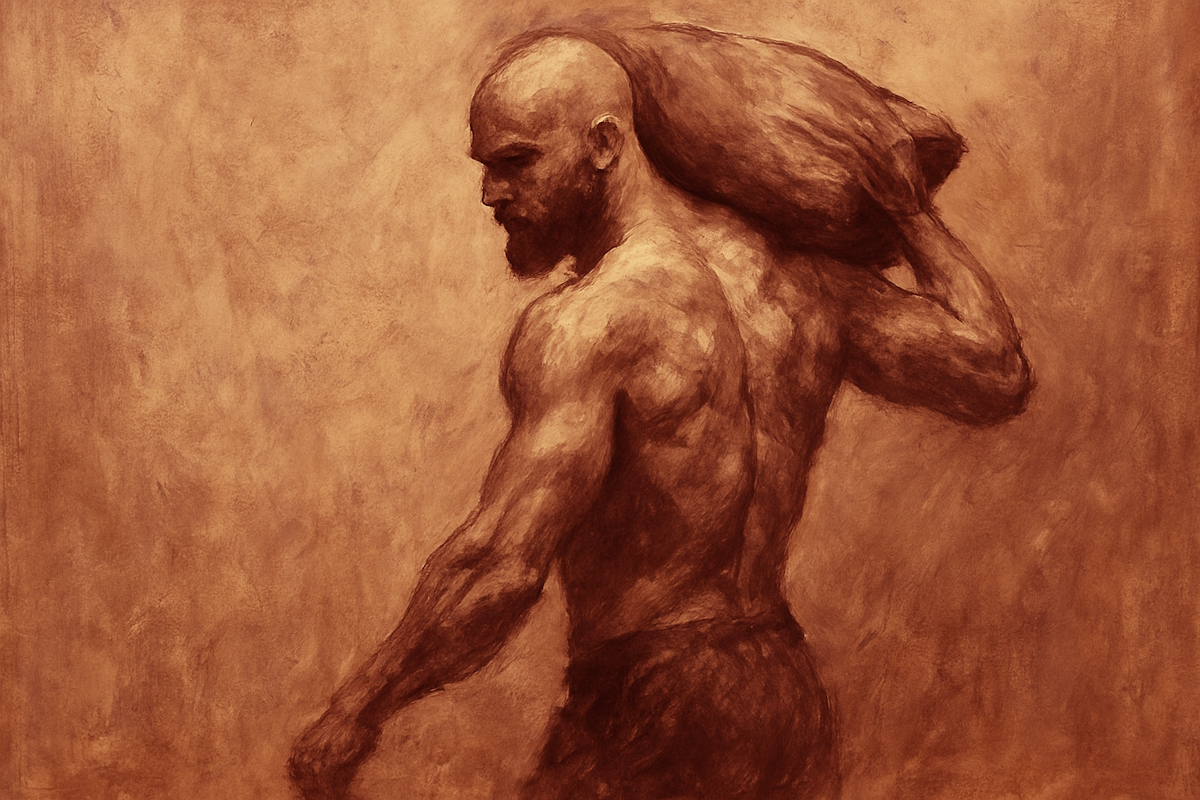
The Key Differences Between Physique Building and Bodybuilding

The Key Differences Between Musclebuilding and Bodybuilding

On the surface, Physique Building and bodybuilding look like they’re cut from the same cloth.

Both demand real time under tension. Both demand serious commitment in the kitchen, in bed (sleep), and in how you carry yourself day to day. Both laugh in the face of mediocrity. They’re worlds apart from the casual crowd trying to “tone up” for summer.

But once you look closer—once you get under the skin—you’ll see the differences aren’t minor.

They’re massive.

Physique Building isn’t about showcasing muscle.

It’s about becoming the man who built it.

Let’s dive deeper.

1. Physique Builders Don’t Care About the Stage

Bodybuilding is for the most part a sport. It’s a competition with others. Thus, it’s judged and scored. You train, you diet, you dehydrate, and then you throw on some posing trunks, slather on spray tan, and step under the lights.

You’re not being evaluated on who you are. You’re being graded on symmetry, proportion, and dryness. Not strength. Not grit. Not character.

Physique Building ain’t that.

We’re not stepping on stages—we’re stepping into life. Into the arena of manhood.

We don’t train to impress judges.

We train because it makes us better men.

We build to sharpen our edge—for our families, our communities, and our futures.

This isn’t about applause. It’s about becoming a force.

2. Physique Building Is Health-Focused First

Here’s the truth most won’t tell you: Competitive bodybuilding can seriously wreck your health.

The weight yo-yoing (bulking up and cutting down). The starvation diets. The extremely low body fat levels. The overtraining (because your calories are so low and your sleep is jacked). The dehydration (not healthy, ever). The PED use (not all, but some)…it all adds up.

Physique Builders play the long game. The health game.

We build for presence, strength, function, and performance that lasts. We don’t crash our hormones for a 6-hour photoshoot. We don’t starve ourselves to show veins.

We train hard, eat smart, stay hydrated, recover deeply, and keep our hormones thriving naturally.

We’re here to live longer, lift longer, and lead stronger.

3. Physique Builders Stay in the Sweet Spot

Here’s another trap: bodybuilders swing between extremes—bulk up sloppy, then cut down to the bone for show day. That swing is a wrecking ball to your metabolism, your joints, and your mindset.

A pro might step on stage at 3% body fat. That’s not healthy. That’s not sustainable. That’s not living.

Physique Builders stay lean, strong, and ready all year.

We live in the 8–15% body fat zone—where hormones are optimized, energy is sky high, and you look like a machine whether you’re lifting, hiking, or tossing your kid in the air.

No bloat. No crash. Just powerful, athletic muscle that lasts.

4. Physique Builders Don’t Chase Symmetry—We Train for Total-Body Dominance

Bodybuilders obsess over “bringing up their delts,” or “the ham-glute tie-in.”

They train for visual balance. For the camera lens. For the judges.

Don’t get me wrong, we’re all for aesthetics—but that’s not the main mission.

Physique Builders train for total-body dominance.

We care about pushing, pulling, carrying, sprinting, and throwing. We care about building muscle across the whole frame—functional, primal, powerful.

If a muscle’s underdeveloped? Sure, we’ll hit it.

But we don’t chase show muscle—we chase go muscle.

We train to be unstoppable.

Final Word

If bodybuilding is a sport and lifestyle, Physique Building is a lifestyle and mission.

It’s not about trophies. It’s about legacy. It’s about becoming the kind of man your son wants to emulate and your enemies don’t want to cross.

We don’t train for the stage. We train for life.

And that makes all the difference.

The Builder Physique

What Is a Physique Builder?

Men train for many reasons.

Us?

We train for a lean, muscular, capable body—and the presence that comes with it.

That’s Player Presence.

We’re Physique Builders.

Training for the arena. Training for life.

Training to win.

The Physique Builder Defined

A Physique Builder is a man who trains, eats, and lives with intention.

Our intent is muscle. Strength. Engine. Power. Flexibility. Coordination. Balance.

We want looks. Virility. Performance. Health. Longevity.

Lean. Mean. Dangerous—into old age.

We love the lifestyle, but don’t live for it. It serves us—not the other way around.

We build to take on anything life throws at us—and win.

Our aim is to only get better with age.

What a Physique Builder Stands For

Muscle with Meaning

Not just size—presence.

A body that goes, not just shows… and looks that way.

Strength with Purpose

Not just what you can lift in the gym—what you can carry outside of it.

Real-world, useful strength…literal and figurative.

Discipline Without Obsession

Training, nutrition, sleep—dialed in.

But not extreme. Not fragile.

Masculinity, Grounded

He does tough things. He takes responsibility.

He builds himself—daily.

The Edge, Kept Sharp

The Physique Builder doesn’t drift.

Not in body. Not in mind.

He sharpens the blade—every day.

The Mission

The world doesn’t need more weak men.

It needs more men who are:

  • Capable
  • Prepared
  • Disciplined

Men who are ready to take action…and then take action.

Men who look like they can handle life—and then handle it.

Brick by Brick

Every rep. Every set. Every session.

Every meal. Every second of sleep.

Every decision…

It all adds up.

The only question now is…

Are you in?

Then get building.

Some Muscles Will Just Respond Better Than Others

Some Muscles Will Just Respond Better Than Others

One of the weird, but maybe not so weird, things about building muscle is this:

Some body parts just grow.

Others fight you.

Indeed, some men will find that their biceps respond incredibly well to training. A few curls, a decent pump, and suddenly they’ve got softballs hanging off the front of their arms.

Other guys, myself included, can train biceps hard for years and still feel like they’re chasing something.

Meanwhile, their triceps, chest, or back blow up almost effortlessly.

This is just the nature of the beast.

If you’ve been lifting for any length of time, you’ve noticed it. If you’re new…you will.

For me:

  • Triceps
  • Chest
  • Lats
  • Abs and core

These respond extremely well. I can get great pumps. They grow. They get strong. They feel alive when trained.

Not surprisingly, these are my strong points.

But then there are the stubborn ones:

  • Shoulders
  • Biceps
  • Calves

Harder to pump. Slower to grow. Easier to neglect.

And yes, they’re my weak points.

Why This Happens

Muscle growth isn’t just about effort.

It’s influenced by structure (muscle belly length), fiber type distribution, leverage from limb length, neurological efficiency, and your ability to recruit a muscle under load.

Some areas on you are built to grow. Others are going to require war.

You don’t get to choose the hand you were dealt.

But you do get to choose your response.

The Musclebuilder understands this.

He doesn’t complain.

He adapts.

What This Means

Two important things.

1️⃣ You must bust your ass on weak points.

The muscles that don’t respond easily require:

  • More intention
  • More focus
  • Better execution
  • More frequency

Not ego lifting. Not junk volume.

Precise, relentless work.

2️⃣ You must manage your strong points.

Because if you don’t?

They will overpower your physique.

Overdeveloped chest with no shoulders. Big triceps, tiny biceps. Wide lats, flat calves.

That looks unbalanced.

And imbalance isn’t just aesthetic—it can create strength discrepancies and joint stress over time.

This is where being a good observer comes in.

The mirror doesn’t lie. Photos don’t lie. Your lifts don’t lie.

Use them.

Bring Up Weak Points Strategically

Here’s how you attack:

  • Add an extra set or two when training that muscle.
  • Add additional sets on other days.
  • Dedicate an entire weak-point session.
  • Train them first when energy is highest.
  • Slow down tempo and improve connection.

Track it and give it time. After long enough, you should see those weak points catching up.

I emphasize my arms (particularly biceps and forearms) and the difference is noticeable, to the point where I get complements.

It works.

The Deeper Lesson

This isn’t just about muscle.

It’s about life.

Some areas of your life will grow effortlessly.

Others will resist you.

Your career. Your relationships. Your confidence. Your discipline.

The Musclebuilder doesn’t ignore the weak points.

He attacks them.

And he doesn’t let his strengths become blind spots either.

Balance. Awareness. Relentless adjustment.

That’s how you build a complete physique.

That’s how you build a complete man.

Yes, the Gym Is Your Gym…but the World Is Your Gym, Too

Yes, the Gym Is Your Gym...but the World Is Your Gym, Too

Yes, the gym is where the work gets done.

It’s where you track lifts. Chase progression. Build muscle with intention.

The gym is the forge.

But the forge is not the battlefield.

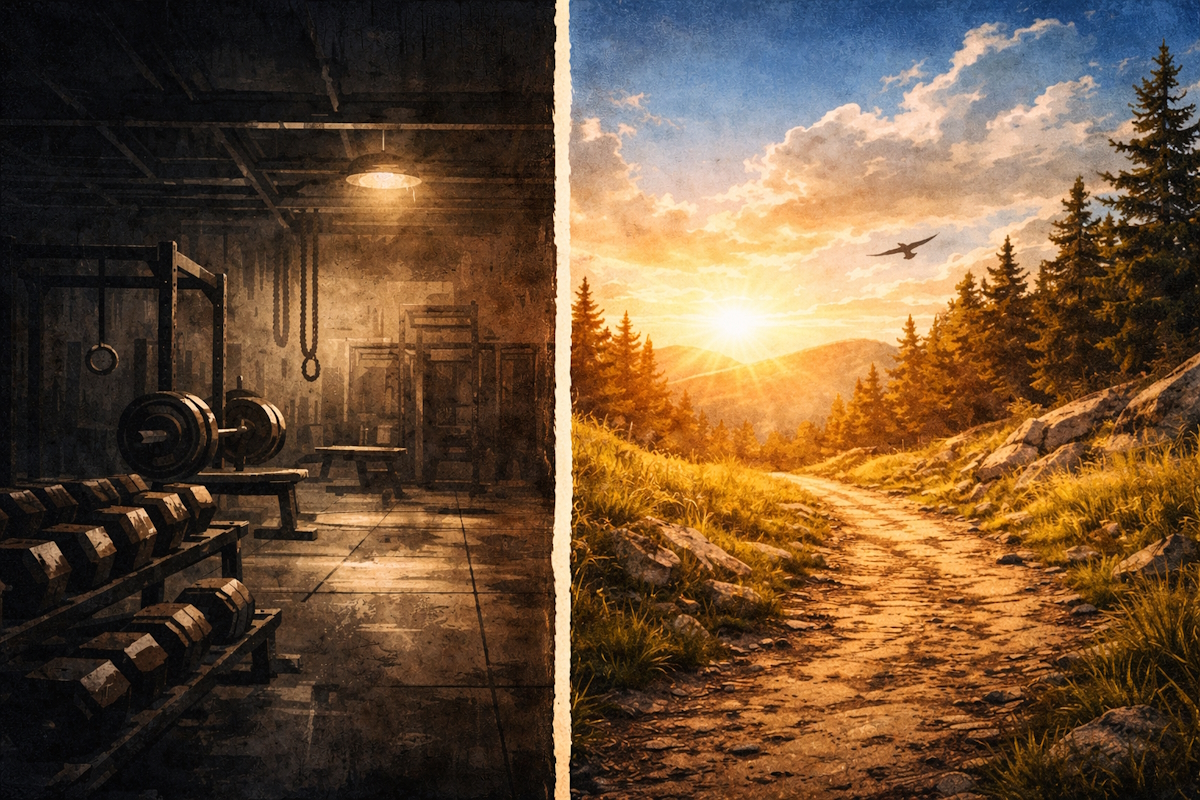
Musclebuilding was never meant to live under fluorescent lights alone.

If all your strength exists inside a building, it’s incomplete.

The Gym Builds Muscle. The World Builds Capacity.

Inside the gym:

  • Controlled tempo
  • Structured sets
  • Progressive overload
  • Measured rest

Outside the gym:

  • Terrain
  • Weather
  • Chaos
  • Play
  • Reactivity

The gym builds the physique.

The world builds the man.

What Feeds the Musclebuilder Outside the Gym? Examples

Run

Not as punishment. As power. Sprints. Hills. Shorter distances. Move your body through space.

Hike

Test your stamina, grit, and explore new places.

Bike

Build lungs. Save joints. Clear your head.

Hit a Calisthenics Park

Pull-ups in the sun feel different. No mirrors. Just gravity and grit.

Play with Your Kids—Actually Play

Sprint. Wrestle. Chase. Be the strong dad, not the tired spectator.

Pick Up a Sport

Competition sharpens timing, coordination, aggression.

Grab Kettlebells and Go Outside

Carries on uneven ground. Swings in the grass. Presses under the sky. Strength feels different when it meets the elements.

Why This Matters

The modern world is engineered for stillness.

Chairs. Screens. Climate control.

The Musclebuilder resists that.

He lifts…

…and he moves.

He doesn’t just look capable…

…he is.

Train in the gym.

Prove it in the world.

The Power of Laying on Flat, Hard Ground

The Power of Laying on Flat, Hard Ground

One of the most powerful recovery tools I’ve ever used costs $0.

No equipment. No mobility routine. No stretching flow. No fancy breathwork protocol.

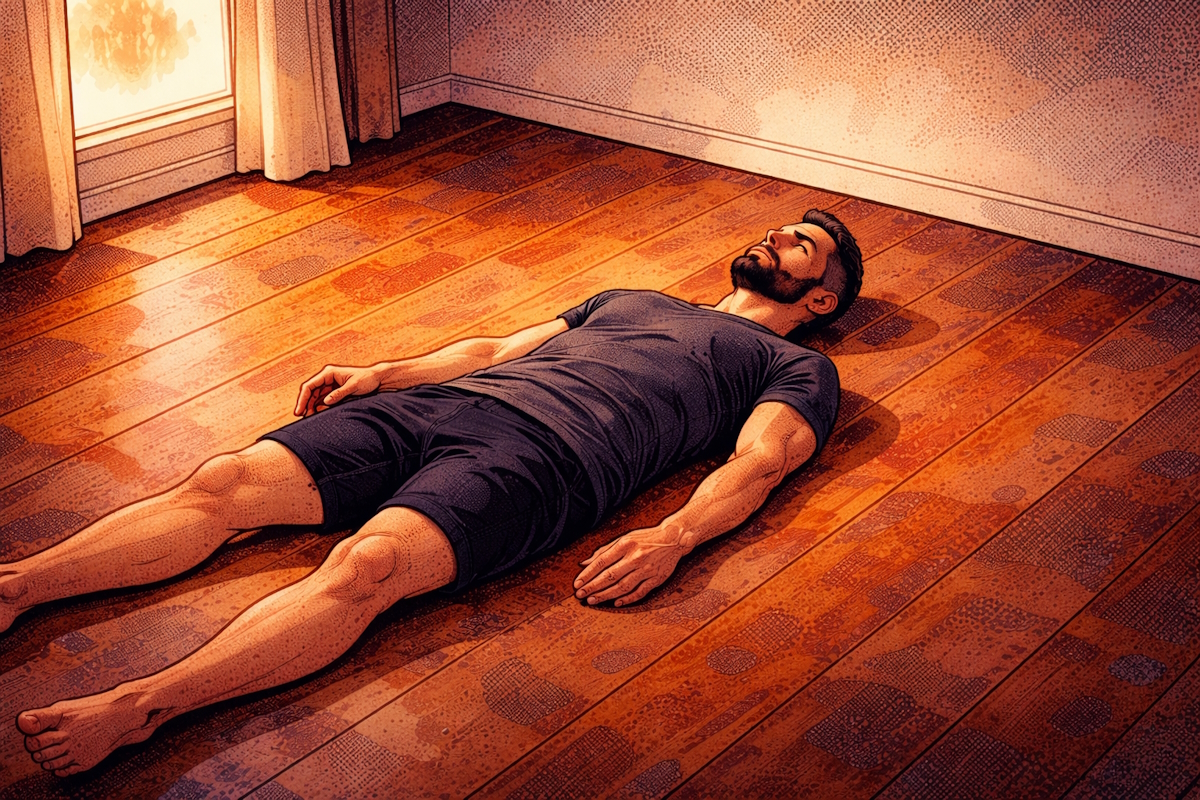
Just lay on the floor.

Flat. On your back. On hard ground.

And do nothing.

It sounds almost stupid.

Until you try it.

All day your spine is under load.

Standing. Sitting. Driving. Training. Looking down at screens.

Your vertebrae are gently compressed from the moment you wake up until the moment you go to bed. Your paraspinal muscles never really shut off. Your posture never really resets. Your nervous system never really stands down.

You are in a low-grade “go mode” for hours and hours.

Then you go sit on a couch. Or lay in a soft bed.

Which just keeps you in the same positions.

But the floor is different.

The floor doesn’t let you sink into bad posture. The floor doesn’t accommodate you. The floor forces you into neutral.

Your shoulders fall back. Your chest opens. Your pelvis settles. Your neck realigns.

Not because you’re trying. Because physics does it for you.

Then something else happens.

You start breathing differently.

You can feel your ribs expand into the ground. Your breaths get slower. Deeper. More diaphragmatic without you even thinking about it.

This sends a very old signal to your nervous system:

We’re safe. You can stand down.

Heart rate drops. Jaw unclenches. Lower back tension melts. Your mind quiets.

Within 3–5 minutes you feel it.

Within 10 minutes you feel like a different person.

This is passive spinal decompression without hanging from a bar. This is posture correction without drills. This is nervous system down-regulation without meditation.

This is ancestral recovery in its simplest form.

Because before couches, recliners, memory foam, and ergonomic chairs…

Humans rested on the ground.

Your body still recognizes it.

Stand up after ten minutes and you’ll notice:

You feel taller. Looser. Calmer. Clearer.

Like your whole system just exhaled.

Give it a try today.

Lay flat on the floor for 10 minutes.

No phone. No stretching. No “routine.” No trying to optimize it.

Just lay there.

And feel what happens.

10 Foods That’ll Kill Your Physique

The 10 Worst Foods for Musclebuilders

We eat differently.

We don’t eat to survive.

We eat to thrive. To perform like it’s gameday (which is every day). To build Player Presence.

We want to give our bodies what they need to build tissue, recover faster, and stay hormonally intact.

Most of the foods on this list share three traits:

Calorie-dense. Nutrient-poor. Easy to overeat.

That’s a dangerous combination for any man trying to build a physique.

Here are ten foods that will crush your physique.

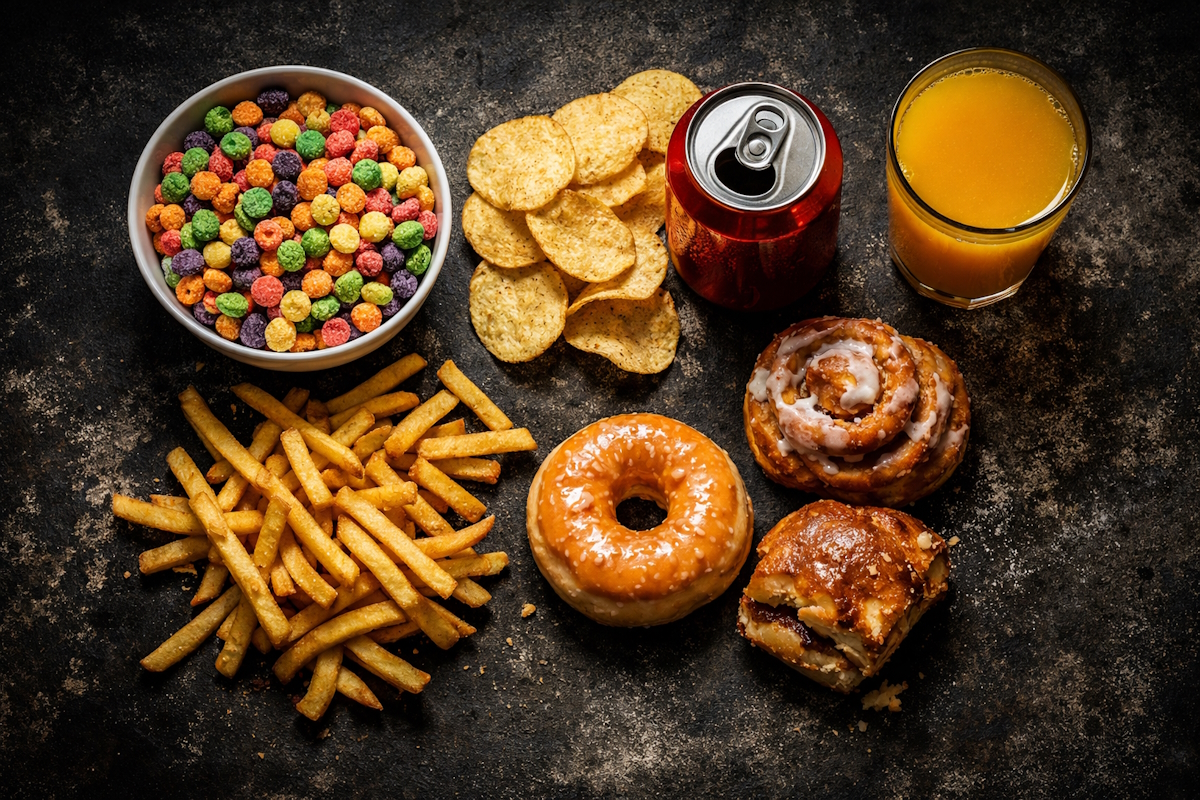
1. Cereal

Marketed as part of a complete breakfast.

In reality, it’s a bowl of refined carbohydrates with a vitamin label slapped on it.

  • Refined carbs
  • Minimal protein
  • Virtually no micronutrient density
  • Blood sugar spike → crash → hunger

Verdict: Empty calories dressed up as food.

2. Pasta

Same raw material as cereal. Different shape.

  • Refined flour
  • Low satiety
  • Often sodium-heavy
  • High-calorie, low-satiety carbs that are easy to overconsume

If you need carbs, there are better sources.

Verdict: Cheap fuel, poor return.

3. Soy-Based “Foods”

The debate never ends—and that’s the point.

  • Heavily processed
  • Commonly GMO
  • Questionable hormonal interactions
  • Zero upside compared to animal proteins

Even if the risks are “small,” why take the risk at all?

Verdict: Not worth the squeeze.

4. Licorice

A sneaky one.

  • Can interfere with testosterone regulation
  • Zero performance benefit

Candy with consequences.

Verdict: Anti-androgenic junk.

5. Anything with Hydrogenated Oils (Trans Fats)

This isn’t diet talk. This is health talk.

Hydrogenated oils are artificial fats the human body was never designed to process.

If it’s hydrogenated, it’s dead food.

Verdict: Builds disease, not your physique.

6. Chips

Engineered to be overeaten.

  • High fat
  • High salt
  • Near-zero micronutrients
  • Extremely calorie-dense with almost no nutritional return

Verdict: Crunchy calories, no value.

7. French Fries

In the same boat as chips.

  • Refined carbs
  • Fried in low-quality oils
  • Calorie-dense, nutrient-void
  • Addictive by design

They look harmless. They aren’t.

Verdict: More calories without value.

8. Soda

No nutrients. No value. No upside.

  • Liquid sugar
  • Artificial additives
  • Displaces real food without providing anything in return

Muscle is built from raw materials, not syrups.

Verdict: Severely off mission.

9. Pastries/Baked Desserts

Donuts. Muffins. Cookies.

The perfect storm of refined flour, sugar, and industrial oils.

  • No micronutrients
  • Easy to overeat
  • Hard to recover from

So good, but so bad.

Verdict: Anti–body composition.

10. Fruit Juice

Whole fruit = fine.

Juice = sugar delivery system.

  • No fiber
  • Easy to overconsume
  • Minimal satiety

Almost as bad as soda.

Verdict: Eat food, don’t drink sugar.

The Rule

Don’t ask:

“Can I eat this?”

Instead ask:

“Does this help me build, recover, or stay sharp?”

If the answer is no—it’s not food. It’s noise.

Eat to build.

So You’re Injured, Now What? How We Deal With Injuries

So You’re Injured, Now What? How Musclebuilders Deal With Injuries

The injury sucks.

But the story you tell yourself after is the part that actually kills your progress.

The torn pec, tweaked back, wrecked knee—those heal.

The dangerous part is the whisper:

“Guess I’m done for a while.”

That’s how your physique dies. Not with a bang, but with a shrug.

Rule #1: You’re Not Done—You’re Rerouted

Injury isn’t a stop sign.

It’s a detour.

You didn’t lose the ability to train.

You lost only one lane of the highway.

The work still gets done.

Rule #2: Train What Isn’t Injured—Aggressively

This is where us Physique Builders separate from the casual crowd.

  • Shoulder blown up? Legs become religion.
  • Knees barking? Upper body becomes art.
  • Back jacked? Sit down and move something—beautifully.

Pain removes options.

Discipline expands the ones left.

Rule #3: Injuries Are Information, Not Insults

Every injury is a data leak from your system.

Not punishment. Not bad luck.

Feedback.

Sleep sloppy? Recovery thin? Form rushed? Volume greedy?

Your body doesn’t betray you.

It audits you.

Rule #4: Let It Heal…Then Make the Comeback

The fastest way back is to stop trying to “get back.”

Let it heal.

And then work your way back.

Your new goal is boring excellence:

  • Flawless reps.
  • Pathetic-looking weight.
  • Surgical tempo.
  • Zero ego.

You don’t get back by wishing.

You get back by working.

Rule #5: Your Mission Outranks Your Mood

This is where most men vanish.

No sweat. No pump. No mirror reward.

So they ghost the gym. Ghost their nutrition. Ghost themselves.

But you’re not here to feel motivated.

You’re here to build.

We show up in all weather.

Always a Builder

Especially when injured.

Injuries help you find out what you’re made of.

You fair weather? Or all weather?

You know the right answer.

Should You Do Olympic Weightlifting?

Walk into any modern gym and you’ll see it.

Bars flying. Plates clanging. Guys dropping weights from overhead like they’re auditioning for the highlight reel of life.

Olympic lifts look heroic. Cleans. Snatches. Jerks. They feel like the secret handshake of serious lifters.

And that’s where a lot of men go wrong.

They confuse impressive with necessary.

Here’s the truth.

Olympic lifts are tools, not commandments.

They are phenomenal at building power and coordination, but they demand three things most men don’t actually have lying around in surplus.

Time. Coaching. Recovery margin.

Time to learn the positions and timing so your hips stop lying and your shoulders stop cheating.

Coaching so you’re not teaching your body sloppy violence that eventually cashes out in pain.

And recovery margin, because fast, ballistic lifting taxes your joints and nervous system in a way slow, controlled training simply doesn’t.

If you’ve got those three, beautiful. You can turn force into poetry.

But if you don’t, you’re not failing the Musclebuilder path. You’re dodging a bullet.

Because Musclebuilding isn’t about how cinematic a movement looks.

It’s about repeatable force against resistance.

You don’t need a snatch to build traps, glutes, lungs, grip, and grit.

A kettlebell and a pair of dumbbells can write the same story with fewer plot holes.

Kettlebell swings for explosive hips and posterior chain.

Dumbbell push presses for full-body power without the gymnastics.

High pulls, heavy carries, goblet squats, step-ups.

Circuits that leave your shirt glued to your spine and your mind sharpened.

You’re still training coordination. You’re still expressing power.

You’re just doing it with tools that forgive imperfect form and reward consistency.

Olympic lifting is a sports car.

Incredible if you’ve got the garage, the mechanic, and the time to polish it.

But most men don’t need a sports car.

They need something reliable.

Something that hauls weight every week without blowing a gasket.

So if you want to sprinkle in Olympic lifts, earn them.

If not, grab some dumbbells. Grab a kettlebell. Grab some cables.

And start building.